


.avif)




Last updated: February 2026, written by a tour operator who lived in Costa Rica for 7 years and has sent thousands of travelers here safely.
Quick Answer: Is Costa Rica Safe Right Now?
If you want the honest answer I give friends, family, and travelers who ask me this all the time:
Yes, Costa Rica is relatively safe, but general precautions should always be taken.
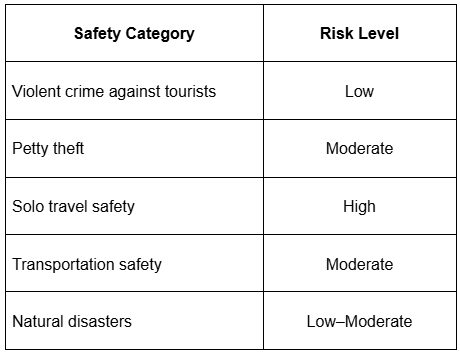
- Violent crime against tourists is rare
- Petty theft is the most common issue
- Popular tourist areas are generally safe
- Solo travelers, including women, visit Costa Rica safely every day
That said, Costa Rica isn’t Disneyland. Like anywhere in the world, you need to be aware of your surroundings, avoid leaving valuables unattended, and use common sense, especially at night.
Updated based on long-term residence and recent traveler feedback. This guide focuses on real-world tourist safety, not media headlines or isolated incidents.
Costa Rica Safety Summary (2026)
In this guide to safety in Costa Rica, you’ll learn…
- Why You Can Trust This Guide
- Is Costa Rica a Safe Country for Tourists?
- Is Costa Rica Safe Compared to Other Countries?
- Is San José, Costa Rica Safe Right Now?
- What Areas of Costa Rica Should Travelers Avoid?
- Is Nightlife Safe in Costa Rica?
- Are Beaches Safe in Costa Rica?
- What Activities Are Safe in Costa Rica?
- Ziplining
- Surfing
- Whitewater rafting
- Waterfall hikes
- Is parasailing safe in Costa Rica?
- Transportation Safety in Costa Rica
- Natural Disasters in Costa Rica
- Medical Care, Emergencies, and the Embassy
- Travel Insurance and Medical Evacuation
- Is Costa Rica Safe for Solo Travelers?
- Should you travel to Costa Rica?
- Are group trips to Costa Rica safe?
Why You Can Trust This Guide
I lived in Costa Rica for seven years, not on vacation, not in a resort bubble, but day‑to‑day life. I learned Spanish, surfed nearly every day, navigated the bureaucracy, and eventually built a travel company that now runs regular group trips here.
As a tour operator, traveler safety isn’t theoretical for me. It’s my responsibility. Every itinerary, hotel, transportation provider, and activity we use in Costa Rica is vetted with safety in mind.
For official advisories, I also keep an eye on updates from the U.S. State Department, CDC, and local embassy alerts — not because they reflect day-to-day tourist reality, but because they flag rare edge cases travelers should be aware of.
Is Costa Rica a Safe Country for Tourists?
Overall, yes.
Costa Rica has long been one of the most politically stable countries in Latin America. It has no standing army, a strong tourism economy, and decades of experience welcoming visitors from around the world.
There has been a rise in crime since the pandemic, that’s true across much of the Americas, but the vast majority of violent crime in Costa Rica is tied to organized narcotics activity and does not involve tourists.
For travelers, the biggest real risk is opportunistic theft, not violent crime. That’s exactly what I brief our groups on before every trip. This is usually situational, unlocked cars, unattended bags at the beach, or travelers standing out late at night, not random targeting.

Is Costa Rica Safe Compared to Other Countries?
This is where context matters.
Costa Rica is generally safer than:
- Mexico
- Colombia
- Brazil
- Most of Central America
It’s comparable to:
- Panama
- Parts of southern Europe
Millions of people travel to Costa Rica every year without incident, which is why it continues to be one of the most popular destinations in the region.
Is San José, Costa Rica Safe Right Now?
San José (or "Chepe," as locals call it) is the capital and where almost every trip to Costa Rica begins. It's changed a lot in recent years. The city has been investing in drawing more travelers, and neighborhoods that were once just a stopover are now worth exploring. Like any capital, it's safe and enjoyable if you stay in the right areas and take basic precautions.
That said, San José can be safe and enjoyable if you stay in the right areas and take basic precautions.
Safer areas to stay
- Escazú
- Santa Ana
- Alajuela
Downtown San José is busy and fine during the day but should be avoided at night. Most tourist issues here involve petty theft, especially after dark.
Tip: Hotels are generally safer than short‑term rental properties. Hotels typically have 24/7 staff and security, whereas Airbnbs are more often targeted for break‑ins.
In recent years, most serious incidents involving tourists have happened at isolated or poorly secured short-term rental properties, not hotels.
What Areas of Costa Rica Should Travelers Avoid?
Based on my experience and feedback from local guides:
- Downtown San José at night
- Walking on beaches after dark
- Staying out past midnight in party zones in towns like Jacó, Tamarindo, and Quepos
During the day, most towns and tourist areas are very safe. If you’re unsure, ask your hotel staff or local guide — locals always know where problems tend to pop up.

Is Nightlife Safe in Costa Rica?
I spent my late twenties in Costa Rica, so yes, I’ve seen the nightlife firsthand.
Nightlife is generally safe earlier in the evening, especially at bars and restaurants that cater to travelers. Risks increase:
- Late at night
- Around discos and casinos
- When alcohol is heavily involved
Most bars close around midnight, and that’s usually a smart time to call it a night.
Are Beaches Safe in Costa Rica?
Costa Rica’s beaches are one of the main reasons people fall in love with the country, myself included.
They’re safe and enjoyable during the day, but you should avoid beaches at night.
One thing many travelers underestimate is rip currents, which can be strong on both the Pacific and Caribbean coasts. Always ask locals where it’s safe to swim and pay attention to posted warnings. I had a dear friend tragically get swept out to sea here, which is why I always emphasize water safety.
What Activities Are Safe in Costa Rica?
Costa Rica is an adventure destination, and most activities are very safe when booked with reputable operators.
Ziplining
Safe when run by established companies that follow international safety standards like Sky Adventures and Treetopia.
Surfing
Incredibly rewarding, but beginners should take lessons and use foam boards. Conditions can change quickly. The current in Jaco can be notoriously strong. Waves like Playa Hermosa can get double overhead, so use common sense and only paddle out if you know what you are doing.

Whitewater rafting
Very safe with licensed outfitters, just listen closely during safety briefings.
Check out our white water rafting itinerary to Costa Rica!

Waterfall hikes
Safe on well‑traveled trails. Most serious accidents happen when people climb or jump without expert guidance.
Is parasailing safe in Costa Rica?
Not really! Yes, I’ve been dragged behind a boat hundreds of feet in the air and had a great time, but the dangerous part is always taking off. I’ve seen too many people get dragged across the sand and come away seriously hurt.
Note: Travelers should engage in these activities at their own risk.
Transportation Safety in Costa Rica
The safest ways to get around:
- Licensed red taxis
- Transportation arranged through your hotel
- Reputable shuttle companies
Public buses are generally safe, but keep an eye on your belongings. Driving yourself is possible, but roads can be narrow, poorly lit, and unpredictable, especially at night.
Uber can be hit or miss in Costa Rica. It’s not readily available in rural areas, and I’ve heard of occasional scams in San Jose. If you can get your hotel to call you a trusted taxi, that's the best bet.
Natural Disasters in Costa Rica
Costa Rica sits in an active seismic and volcanic zone, but serious incidents are rare.
Potential risks include:
- Earthquakes and tsunamis
- Volcanic activity
- Flash flooding during the rainy season
Tourist infrastructure is well prepared, and closures or disruptions are usually temporary.

Medical Care, Emergencies, and the Embassy
Costa Rica has excellent healthcare by regional standards.
- Hospital Cima in San José is a top private hospital
- Public hospitals are best equipped for things like snakebite anti‑venom
Emergency number: 911
If you’re a U.S. traveler, it’s smart to know how to contact your embassy or consulate in case of lost documents or emergencies. This is rare, but good travel planning includes knowing where to turn if something goes wrong.
Travel Insurance and Medical Evacuation
I strongly recommend travel insurance when traveling to Costa Rica.
While medical care is good, serious injuries can require medical evacuation, which can be extremely expensive without coverage.
Travel insurance can also help with:
- Trip interruptions
- Lost or stolen luggage
- Emergency medical care
My lawyers insist I tell you, “This is not a recommendation to buy travel insurance,” and disclose that I get compensated if you purchase the travel insurance. I direct travelers to Wanderwell, SafetyWing, and World Nomads.
Is Costa Rica Safe for Solo Travelers?
Yes, and this is one of Costa Rica’s biggest strengths.
Roughly 70% of the travelers we send here are solo travelers, most of them women. Costa Rica consistently ranks as one of the best destinations in the region for solo travel.
Group travel can add another layer of safety by providing local guides, transportation, and built‑in travel companions.
Should You Travel to Costa Rica?
Absolutely!
Costa Rica changed the trajectory of my life. What started as a short trip turned into years of living there, learning Spanish, surfing daily, and eventually building a travel business around experiences like these.
If you love nature, adventure, warm weather, and a laid‑back pura vida lifestyle, Costa Rica is hard to beat.
Costa Rica is a great choice if you want adventure, nature, and ease of travel, but if you’re looking for nonstop nightlife or ultra-cheap party travel, it may not be the best fit.
Are group trips to Costa Rica safe?
Traveling with a group is one of the safest ways to experience Costa Rica, especially for solo travelers. Local guides handle transportation, accommodations, and activity safety so you can focus on enjoying the country.
You can check out our 9-day itinerary to Costa Rica or our 5-day Costa Rica itinerary.


