South Korea

Seoul nights, the DMZ, Jeonju bibimbap, and Busan by the sea.

9

DAYS  /

8

 NIGHTS

8
16
Group Size
Light
Activity Level
From
$
2295
per person · $
195
 deposit
OverviewTrip DetailsFull ItineraryWhere You StayWhat's IncludedReviewsFAQDates & Prices
★★★★★
4.9
· 1,000+ reviews
10,000+
travelers since 2012
1 in 3
book a second trip
As seen in
Forbes
·
CNN
The Experience

Seoul, Jeonju, and Busan in 9 days

Start in Seoul for palaces, markets, and the DMZ, ride the KTX south for Jeonju’s hanok lanes and food scene, then finish in Busan with a seaside temple, street art, and a beginner Taekwondo class.

Along the way

The experience

From the trip

On the ground

You Won't Be the Odd One Out

Come alone. Leave with 15 friends.

Most people book this trip solo — small groups of like-minded 21–35s mean connection happens fast. No third-wheeling, no FOMO.

70%+
join solo
8–16
per group, max
1 in 3
come back
Trip Details

Everything you need to know, up front.

✈ Start

Seoul
 (
ICN
) ·
2:00 pm

Fly into Incheon International Airport and use the included airport pickup to reach our hotel in central Seoul. Meet your Trip Leader, take an orientation walk, and get your first taste of the city.

Plan to arrive in time for a 2:00 pm start.

✈ Finish

Seoul
 (
ICN
) ·
Any time

The trip ends in Seoul on Day 9. You can depart at any time, or stay longer and keep exploring the city.

Transportation to the airport on departure day is not included.

Physicality

Light

You’ll walk a lot through Seoul, Jeonju, and Busan, including a mostly paved section of the Seoul Fortress Wall Trail. There are no strenuous activities, but the beginner Taekwondo class can still get sweaty.

Downtime

Some

You’ll have several free evenings and a few open stretches for things like a Korean baseball game, Seongsudong, or extra market time, but most days still have a solid plan.

Where

Seoul

Seoul is the trip’s main anchor, with time here at the start and end. In between, you’ll switch bases to Jeonju and Busan, so expect a true multi-stop route.

The Group

8
16
 solo travelers

Expect 8-16 travelers, with most departures around 12-14. It’s small enough to move smoothly through busy stations and markets, and big enough for shared meals and nights out.

Day by Day

Day
1

Let Your South Korea Tour Begin!

Annyeong! Arrive at Incheon International Airport and hop on the included transportation to our hotel in the heart of Seoul, South Korea’s capital city.

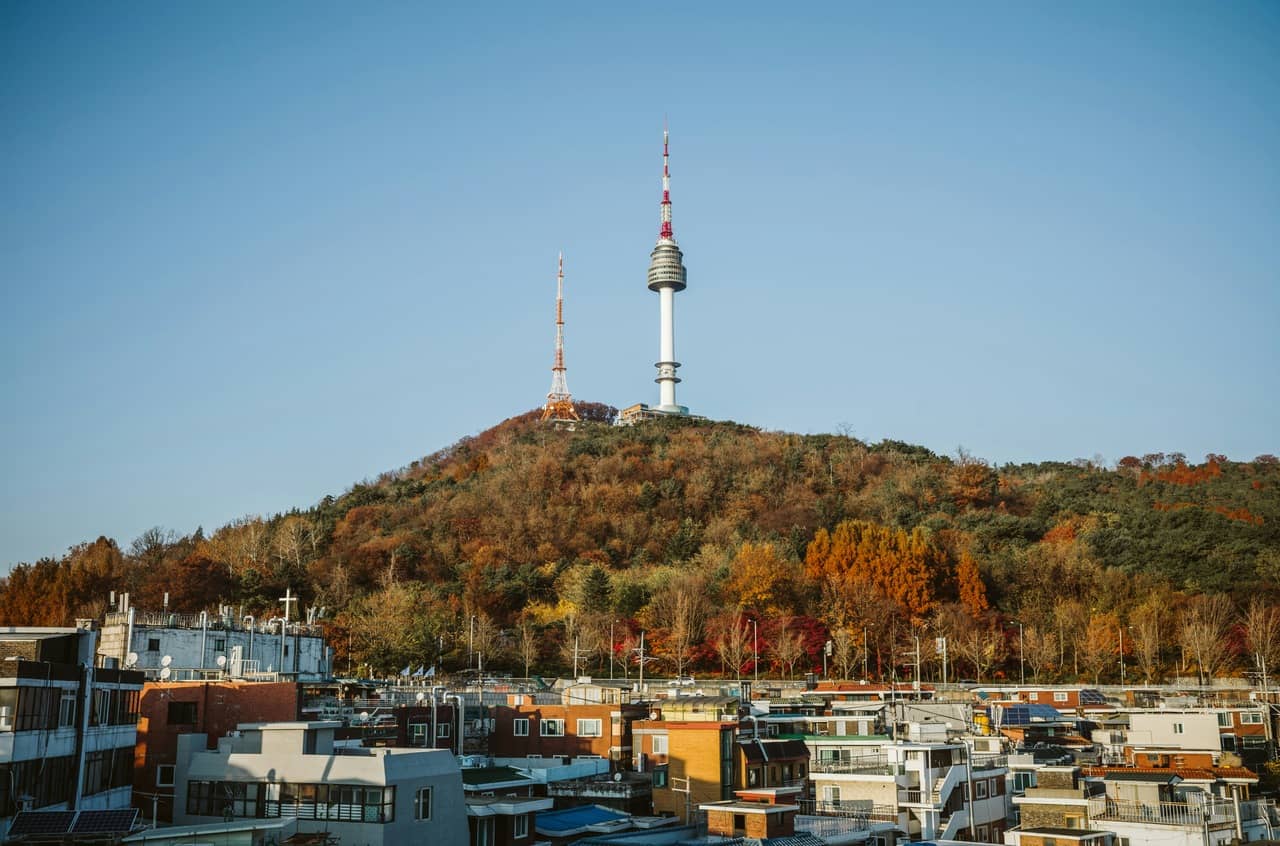
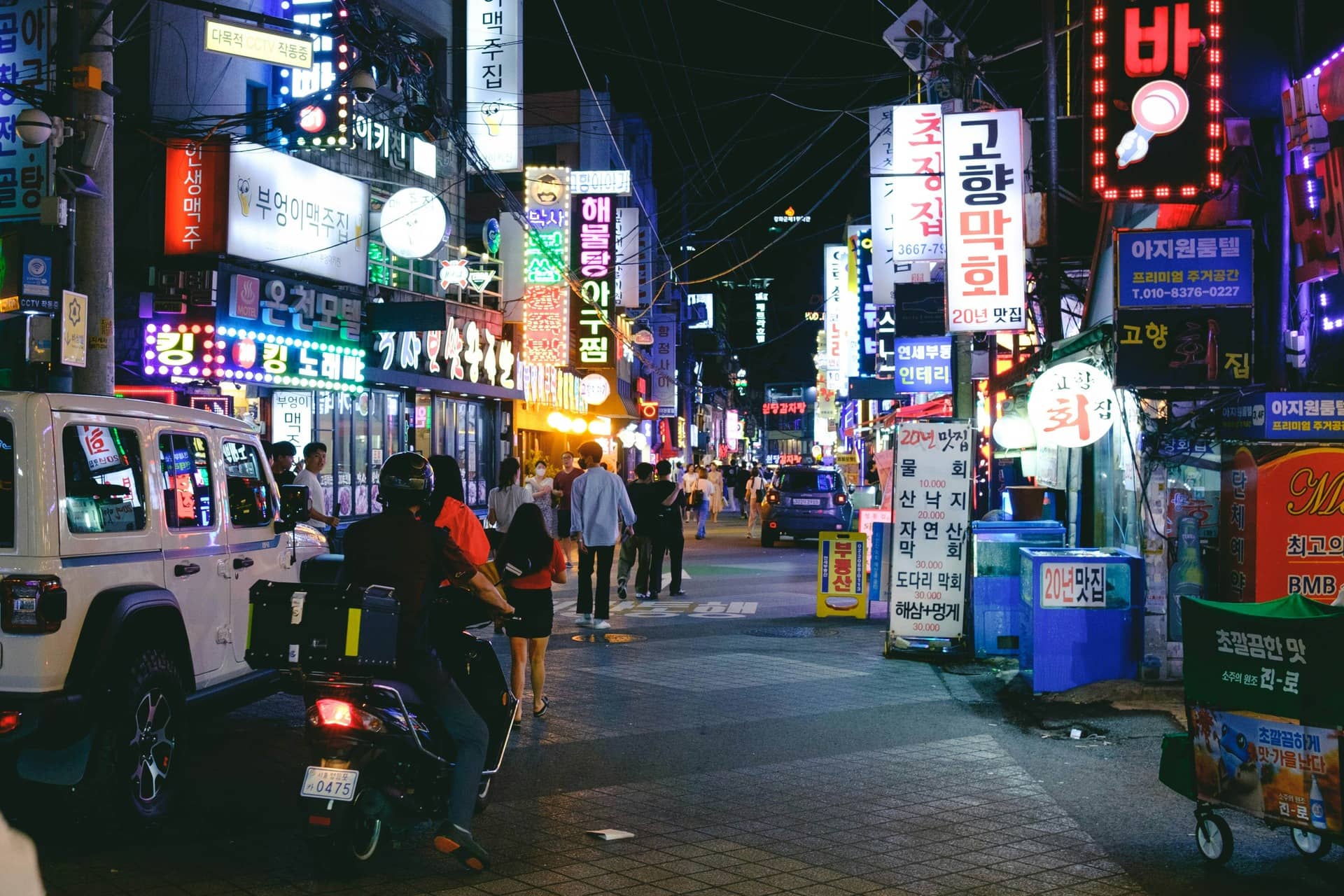
This city is where the old meets the new in the most clever ways. You’ll see ancient shrines and medieval fortresses next to futuristic architecture and extravagant shopping malls. 

Wondering about your food experiences? You'll discover the rich flavors of South Korean cuisine and indulge in its culinary delicacies on your journey through the country.

Your Trip Leader will guide you through an orientation walk and get you acclimated to the lively energy of Seoul. And when it’s time for dinner, you can try some Korean fried chicken restaurants, just as locals enjoy it, with a cold beer on the side. End your day by tasting some desserts at the night market.

Today's Highlights
  • Arrive in Seoul
  • Included airport pickup from Incheon
  • Orientation walk with your Trip Leader
Your Free Time

Head out for dinner and a first look at Seoul after the welcome walk.

Day
2

Demilitarized Zone (DMZ)

Time to step into some history with a visit to the Korean Demilitarized Zone (DMZ) from South Korea, where you can learn about the war between North and South Korea. The Bridge of Freedom was used to exchange prisoners during the Korean War and today stands as a reminder of past tensions. 

Explore the 3rd Infiltration Tunnel, an incomplete passage built by North Korea under the Demilitarized Zone. Don’t miss the Dora Observatory, where you can see North Korea in the distance.

The day continues with a visit to Gangnam, one of Seoul’s most modern, affluent, and trend-setting districts. Explore Starfield COEX, a huge shopping, dining, and entertainment complex including the Starfield Library!

Enjoy a free evening to discover more of Seoul as you please. Check out a Korean baseball game or Banpo’s rainbow bridge.

Today's Highlights
  • DMZ day trip
  • Bridge of Freedom, 3rd Infiltration Tunnel, and Dora Observatory
  • Gangnam and the Starfield COEX Library
Optional

Korean baseball game

Your Free Time

Free evening back in Seoul.

Day
3

Gyeongbukgong Palace

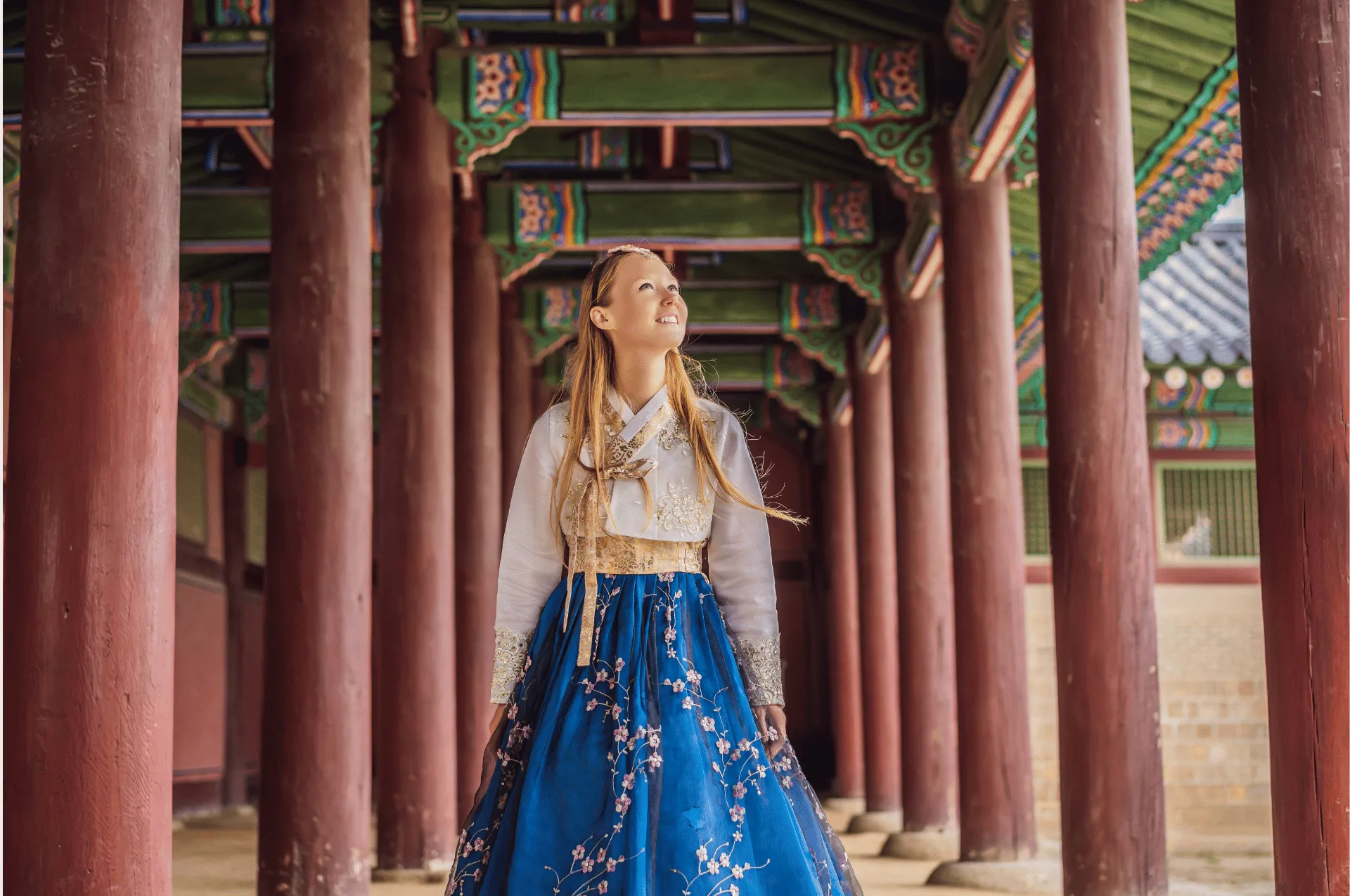
Experience Gyeongbukgung Palace which dates back to the 14th century. Renting a hanbok and touring the palace in a traditional Korean dress will add an authentic touch to your experience.

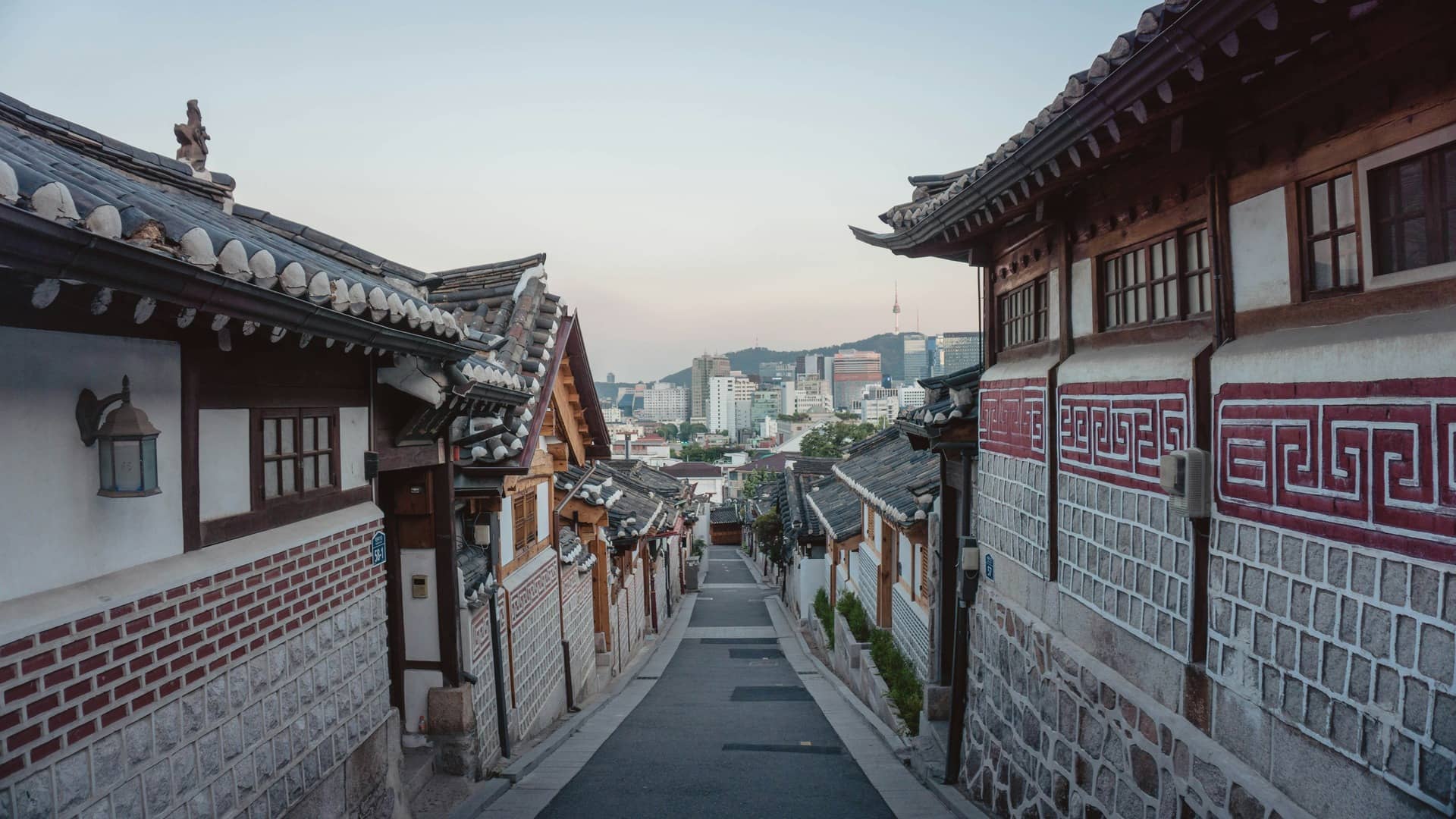
Walk through the picturesque Bukchon Hanok Village, home to traditional wooden Hanok houses that show the essence of Korean culture. Afterwarrds, learn how to make the Korean Dalgona candy at the thriving Gwangjang market.

Enjoy incredible city views as you walk along parts of the Seoul Fortress Wall, a historic site from 1396. The mostly paved trail leads up to Naksan Mountain and the mural village of Ihwa-dong, showcasing local artists' work. It's the perfect spot to snap some Instagram-worthy pics!

Afterward, head out with your friends to discover more of Seoul’s lively nightlife—there’s always something happening after dark!

Today's Highlights
  • Gyeongbokgung Palace
  • Bukchon Hanok Village and Gwangjang Market
  • Seoul Fortress Wall Trail to Naksan and Ihwa-dong
Optional

Hanbok rental at Gyeongbokgung Palace

Your Free Time

Spend the evening out in Seoul after the wall walk.

Day
4

Jeonju, the Food Capital of Korea

Leaving Seoul behind, travel to the city of Jeonju, known for its tradition, nature, and preservation of Korean history and culture. 

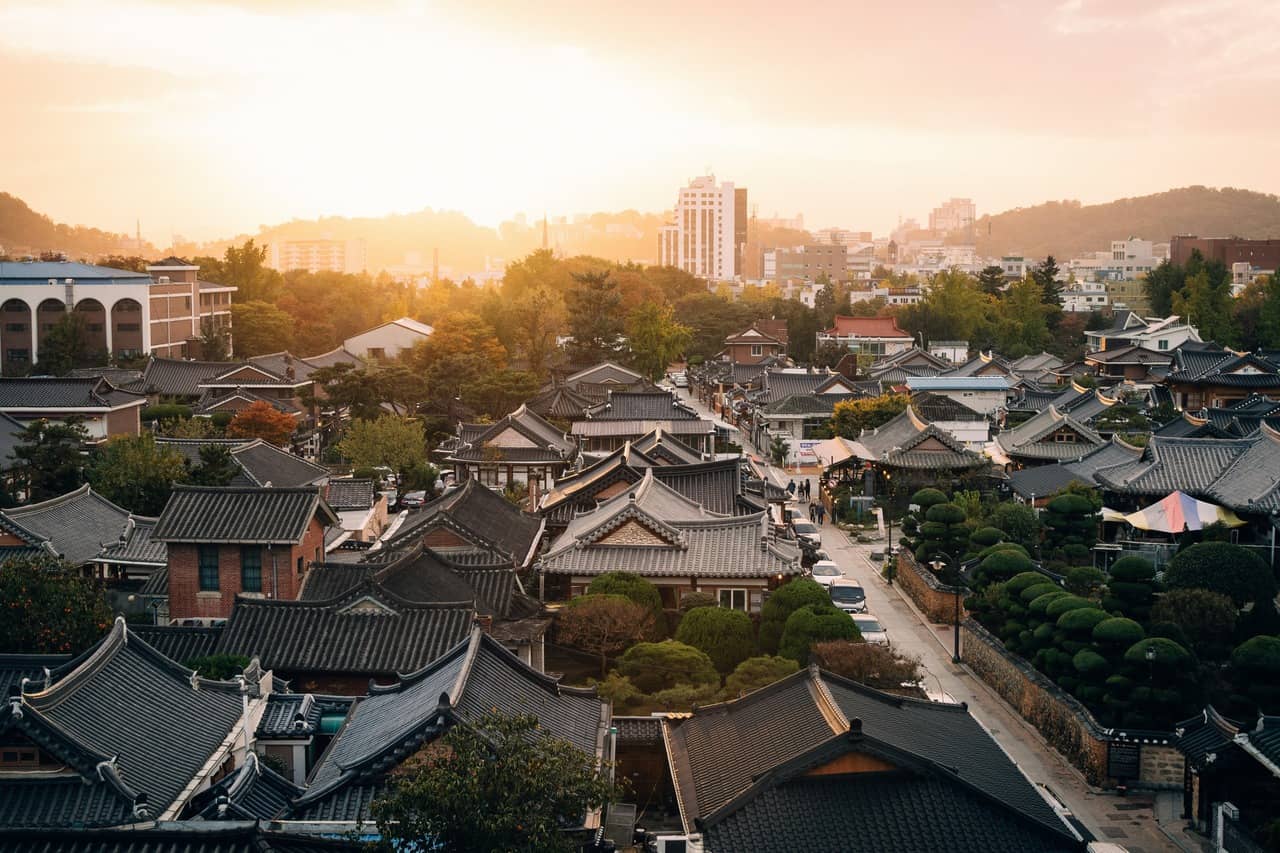
On a guided tour of Jeonju Hanok village, you’ll experience the charm of Korean architecture. The beautifully preserved Hanok houses, narrow alleyways, quaint shops, and cozy cafes will enchant you, and you’ll feel like you're stepping back in time.

Learn about the art of Hanji in a Korean traditional paper-making class. You’ll even get to make your own sheet that you can take home as a souvenir!  

Enjoy some free time exploring the city of Jeonju, its craft shops, and Korean food stalls as you please—there’s plenty to discover!

Today's Highlights
  • Travel to Jeonju
  • Guided walk through Jeonju Hanok Village
  • Hanji papermaking workshop
Your Free Time

Use your free time to wander Jeonju’s alleys, shops, and food stalls.

Day
5

Seo Hakdong Art Village

Stroll through the Seohakdong Artists Village and learn how locals have transformed one of the poorer neighborhoods in Jeonju into a creative studio for artists.

Foodie’s delight! You can't leave Jeonju without trying its legendary bibimbap, its most renowned and loved dish. Served as a bowl of warm white rice topped with sauteed and seasoned vegetables, sliced meat, and mixed with chili pepper paste and egg. It’s a must-try and one that you will experience with an included dinner!

In the evening, visit a traditional market with your Trip Leader and continue to embrace the art culture of Jeonju.

Today's Highlights
  • Seohakdong Artists Village
  • Included bibimbap dinner
  • Traditional market visit with your Trip Leader
Day
6

Gamcheon Culture Village

Begin your day like a local with a bowl of Jeonju’s famous bean sprout soup. Koreans claim their bean sprout soup is a hangover cure if you have too much soju, Korea’s most famous spirit.

Discover a unique experience on a visit to Haedong Yonggungsa, an oceanside Buddhist temple whose name translates to “Korean Dragon Palace Temple.” This place offers stunning coastline views, blending spiritual beauty with a picturesque setting.

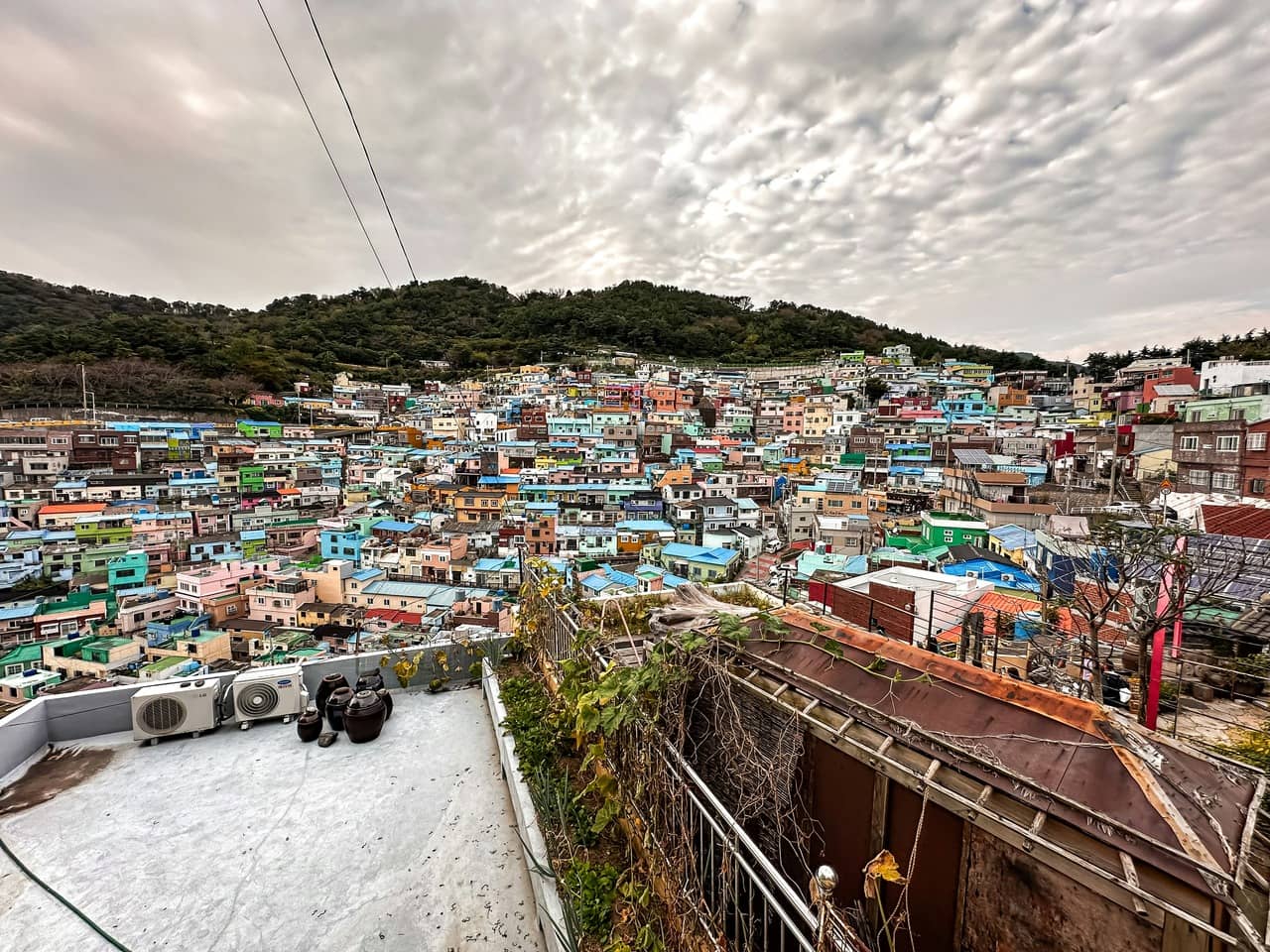
You will also visit Gamcheon village, where colorful roofs seem to touch the sky while murals cover the alleyways, giving this mountain village an animated vibe. Here, you can try bubble (boba) tea and shop for souvenirs while admiring the various street art and sculptures that showcase the talent of local artists.

Your final stop is Busan, South Korea’s lively coastal city, home to stunning beaches, bustling nightlife, and rich cultural experiences.  

Today's Highlights
  • Jeonju bean sprout soup breakfast
  • Haedong Yonggungsa seaside temple
  • Gamcheon Village and arrival in Busan
Your Free Time

Browse Gamcheon’s alleyways before continuing on to Busan.

Day
7

Busan

Join a private Taekwondo class and learn lessons with a local master who will introduce you to this martial art, which originated from indigenous Korean fighting styles. 

Experience Millac the Market, a lively multi-purpose cultural space built on the site of an old fish market. Serving as one of Busan's hottest hangouts, Millac the Market blends waterfront vibes with shopping, dining, and a variety of activities. 

The evening is yours to enjoy Busan’s nightlife. The district of Seomyeon is home to bars, restaurants, and arcades. Or head over to Haeundae Traditional Market for some delicious street food.

Today's Highlights
  • Beginner Taekwondo class
  • Millac the Market
  • Busan waterfront nightlife
Your Free Time

The evening is yours in Busan.

Day
8

Return to Seoul

Travel back to Seoul aboard South Korea’s high-speed rail system, the KTX train. 

Once in the capital, you can explore this modern metropolis for the rest of the day. Consider visiting the National Museum of Korea or heading over to the hip area of Seongsudong, known for its cafes, shops, pop-up stores, trendy boutiques, and eateries.

Enjoy the Korean hotpot as your last dinner in South Korea with your friends and experience the nightlife of Seoul.

Today's Highlights
  • KTX train back to Seoul
  • Free time in the capital
  • Final hotpot dinner
Your Free Time

Use your last full day for museums, cafes, or shopping in Seoul.

Day
9

Depart South Korea

Enjoy your final morning in Seoul before packing up and checking out of the hotel. 

It’s time to say goodbye to your new friends and make plans to meet up for more adventures in the future. You are free to depart at any time of the day. Be sure to get instructions from your Trip Leader on how to take local transportation to the airport.

Ask your Trip Leader for suggestions if you plan to spend more time in Seoul.

Want to learn more about Korea? Visit our South Korea Travel FAQs.

Stay in touch with the Under30Experiences Community in our Facebook and WhatsApp Groups, and look out for a meetup in a city near you!

Today's Highlights
  • Final morning in Seoul
  • Hotel checkout
  • Depart at any time
Your Free Time

Depart when you’re ready, or stay longer in Seoul if you want more time in the city.

Where You'll Stay

Where you’ll stay

4-star boutique · Featured on this trip

Shared hotel rooms

Seoul, Jeonju & Busan, South Korea

You’ll stay in shared hotel rooms throughout the trip, with laundry service available at most stays for a fee or laundromats nearby.

Hotels vary by departure; solo travelers share with a same-gender roommate unless they book a private room.

No Hidden Fees, Ever

What's included

    • 9 days & 8 nights in shared hotel rooms
    • 7 breakfasts, 3 lunches, & 3 dinners
    • Admission and guided tour of the Demilitarized Zone (DMZ)
    • Entry to Gyeongbokgung Palace in Seoul
    • Visit to the village of Bukcheon
    • A guided food tour through Gwangjang Market in Seoul
    • Guided hike along the Seoul Fortress Wall Trail
    • Entry to COEX Starfield Library
    • Guided walking tour of Jeonju Village
    • Korean traditional papermaking workshop
    • Walking tour of Seohakdong Artists Village in Jeonju
    • Experience Gamcheon Village
    • Admission and tour of Haedong Dragon Temple by the Sea
    • Beginner Taekwondo class from a local master
    • Ride on South Korea’s high-speed rail system
    • Private airport pick-up upon arrival
    • Under30Experiences Trip Leader
    • Personal recommendations for optional activities
    • The chance to meet kick-ass people
    • Access to the Under30Experiences community
    • All taxes are always included, NO hidden fees or blackout dates

Not included

    • Travelers are responsible for international airfare to and from South Korea.
    • Transportation for optional activities is not included.

All taxes are included, and you can switch to another trip free more than 60 days before departure.

Why U30X, Not the Other Guys

This isn't a 50-person tour bus.

Plenty of companies will fly you to Costa Rica for less. Here's what you're actually paying for — and why people who travel with us rarely go back to the alternative.

8–16

A real group, not a crowd

Small enough that you'll know everyone's name by day two. Not a 40-person coach where you're a wristband.

Boutique stays, not party hostels

Locally-owned places with character and comfort — not a bunk in a 12-bed dorm. Where you sleep is part of the trip.

Real free time, not a forced march

We guide the big moments and leave the rest open. No 6am wake-up calls to tick boxes you didn't ask for.

One price, no nickel-and-diming

Hotels, activities, ground transport, your leader, and taxes — included. No hidden fees stacking up after you book.

Don't Take Our Word For It

10,000+ travelers. 4.9 stars. 1 in 3 come back.

5

I just finished my fourth trip with Under30 to South Korea. One of the reasons I love traveling with this company is their ability to create truly authentic cultural experiences by taking you off the beaten path, while still including iconic tourist highlights. Every trip is a seamless, all-inclusive immersion--from the local food to the unique accommodations and thoughtfully curated activities. They strike the perfect balance between adventure and comfort, making each journey unforgettable.

Rachael J. — South Korea
Rachael J.
Other
5

I have been on a number of trips with Under30Experiences and my recent trip to their newly added South Korea dates created the same (if not more) memorable experiences and learning opportunities throughout our 9-day stay in 3 different cities. Visiting Seoul, Jeonju, and Busan and even a few places in between such as the DMZ, travelers got a taste of the northern Asian country as each destination offered its own unique differences between other areas of the country.

Brandon I. — South Korea
Brandon I.
Other
5

I recently returned from the Under30Experiences South Korea trip, and I had an incredible time! I had to leave a review to let other people know how awesome this trip is. The trip was a perfect mix of beautiful sights, rich culture, and delicious food...This was my third trip with U30X, and while they've all been great, this one was particularly outstanding.

Nicholas L. — South Korea
Nicholas L.
Other
Straight from the group chat — tagged @under30experiences
Follow →
No items found.
You're in Good Hands

Looked after, before and during.

During the Trip · Your Trip Leader

Vetted, experienced & with you the whole way

Every departure is led by a dedicated U30X Trip Leader who handles the logistics, brings the group together from day one, and works alongside our trusted local guides on the ground.

"My job is to make sure you never feel lost — and never feel like you're traveling alone."

Support that doesn't sleep

  • 24/7 global support

    Reach a real person any time, anywhere, before and during your trip.

  • WhatsApp us anytime

    Message us at 1 (888) 959-4436 — we answer how you actually communicate.

  • Safety-first, always

    Vetted partners, trusted accommodations, and a leader who's done this before.

Before You Even Leave

You won't show up to a plane full of strangers.

The community starts the day you book — not the day you land. By the time you're at the airport, these are already people you've been talking to for weeks.

  • 1
    Your group chat opens early
    Get added to your trip's WhatsApp group ahead of time — coordinate flights, ask questions, start the inside jokes before day one.
  • 2
    Meet your group before you go
    A pre-trip welcome call introduces everyone and answers the nervous-first-timer questions.
  • 3
    Know who's coming
    See your roster and Trip Leader ahead of time, so the first hello feels like meeting a friend.
Good to Know

South Korea FAQs

What optional activities are available?

Seoul

  • Korean Baseball Game: 15-25 USD, depending on the seat you select. 
  • HiKR Ground: free
  • Noryangjin Fish Market: free to visit, and you can buy food directly from the vendors and have it cooked in a restaurant on site.
  • National Museum of Korea: free admission
  • Lotte Tower’s Sky Observatory: 25 USD

Jeonju

  • Join a workshop in the art village
  • Hike to Omokdae Viewpoint

Busan

  • Go for a ride on the seaside train
  • Busan Tower starting from 10 USD

While your Trip Leader will assist you with optional activities available, please note that any optional activities you undertake are not part of the Under30Experiences itinerary. We offer no guarantees on their safety or quality standards.

What's the weather like?

Spring season: March into May

In the spring, temperatures range from 73 degrees Fahrenheit (23 degrees Celsius) and 86 degrees Fahrenheit (30 degrees Celsius) between March and May. The air is crisp and clear.

Spring is a gorgeous season to visit Korea, with cherry blossoms and other flowers blooming. Although the season is visually stunning, it remains cool, so pack sweaters and jackets to stay comfortable against the chilly breezes.

Summer season: June through August

Temperatures can range between 73 degrees Fahrenheit (23 degrees Celsius) and 86 degrees Fahrenheit (30 degrees Celsius). It can be incredibly humid, and this is also when the monsoon rains hit. On average, the hottest month of the year is August, while July is the wettest.

Autumn season: October and November

Expect average temperatures to be between 66 degrees Fahrenheit (19 degrees Celsius) and 69 degrees Fahrenheit (21 degrees Celsius), with low rainfall, extending into mid-December.

Korean autumn is one of the most beautiful times to visit the country, and the weather is fabulous for travelers who are out and about and walking everywhere. The breezes are cooler, but the sun is still strong. Pack layered clothing as it can be warm during the day but get very chilly in the evening.

Winter season: mid-December to March

The weather is cold and dry, with temperatures as low as -4 degrees Fahrenheit (-20 degrees Celsius). The coldest month of the year is January on average.

What should I pack?

Please be eco-friendly!

  • Bring a reusable water bottle to refill from the tap.
  • Use as little plastic as possible by declining straws and plastic bags at restaurants and when shopping.
  • Please avoid aerosol bug sprays as they negatively affect the environment.
  • Use "reef-safe" sunscreens that do not contain oxybenzone and octinoxate because they kill coral.

We recommend using a travel backpack for your convenience or a medium-sized suitcase if you prefer. A daypack is also essential for carrying everyday items. Space is limited on transportation, and only one main piece of luggage per person is allowed. You will be responsible for carrying your own luggage.

Below are our staff picks of the best items on the market that we travel with!  All products selected are 3 ounces or less to comply with TSA carry-on size and are organically inspired when possible.

Important: You will need a power adapter. South Korea has two types of plugs, the Plug Type C (Europlug) and the Plug Type F (German Schuko). These kinds of plugs have two round pins that are placed 19mm apart from each other.

Do not forget: water bottle, sunscreen, waterproof rain jacket, sunglasses, and a hat!

Some links on this page are affiliate links, meaning, at no additional cost to you, Under30Experiences will earn a small commission if you make a purchase.

Is this trip for me?

Are you looking to experience different regions of South Korea in a single trip? Do you want to try one of the world’s best street foods? Are you interested in seeing rich cultural heritage and totally futuristic vibes? Then, our South Korea itinerary is definitely for you!

We’ll visit three different regions on this trip, so expect to move around quite often. There will be a mixture of public and private transportation and time spent in very busy cities such as Seoul and Busan. 

The itinerary offers experiences that glimpse Korea’s cultural past and its modern, rapidly developing technological scene. Seoul, after all, is known as The Futuristic City.

-Age requirement: 21+

-Group size: 16 max, average 12-14 travelers

-Physical rating: Light. Expect to walk quite a bit on this trip as we visit several sites and attractions in multiple cities. However, there are no strenuous activities. The Taekwondo class in Busan is for beginners, but you should expect to sweat. An active lifestyle is helpful, though not required to enjoy the trip. 

Step-by-Step Guide

Planning a trip to South Korea is definitely exciting, but you may have many questions. That's why we've created this comprehensive guide to South Korea Travel FAQs. You don’t have to wonder about visa requirements or the best time to visit; our detailed answers will help you prepare for an unforgettable adventure. We've put together everything you need to know right in these Frequently Asked Questions so you can enjoy your smooth and stress-free trip to South Korea.

Have a question that is not on this list?

Feel free to reach out to our all-star customer service team at bookings@under30experiences.com or by messaging on WhatsApp +1 (888) 959-4436.

Do you have last-minute deals?

Yes, we do! When travelers take advantage of our “Switch Your Trip” program, last-minute slots open up on sold-out trips. Visit our Trips On Sale page for the latest last-minute deals. Sign up to the list to be notified.

Can I bring a drone on my South Korea trip?

No. Private use of drones is forbidden in South Korea. Individuals found in possession of a drone in South Korea should be prepared for confiscation, coupled with a fine.

Can I opt out of an included activity?

Of course! This trip is your trip, and you don’t have to participate in anything you don’t want to. Just be aware that opting out of included activities will not change the trip's price.

Is it necessary to learn Korean?

The official language spoken in South Korea is Korean. Many Koreans speak English, especially the younger generation, due to English being taught in schools; however, it's less common among the older generation. You will find that staff at most tourism-related venues (hotels, restaurants) speak English. Picking up a few basic Korean phrases might be a plus. You can get a good English-Korean guidebook and familiarize yourself with common phrases such as hello, goodbye, thank you, excuse me, and the numbers 1 - 10.

Are credit cards widely accepted in South Korea?

Big places like hotels and major stores will usually take your card. However, smaller shops and restaurants may be cash only, so always carry enough money to cover purchases, as paying with a credit card may not always be an option in South Korea.

Will there be opportunities for laundry service available?

Yes. Hotels may not have the service available on-site, but there are laundromats available near the accommodations. Your Trip Leader can assist you with finding their location.

How much should I budget for food and activities?

We generally recommend 300 USD. Below is a basic breakdown:

  • 8 breakfasts, 1 lunch, and 5 dinners are included
  • A basic Korean dish for lunch can be 6-10 USD, and dinners can range from 15-25 USD. Alcohol is excluded from these price ranges.
  • Optional activities range from 10 USD to 30 USD, depending on the activity. Please note that most museums in Seoul are free to visit.
  • We suggest tipping Trip Leaders 3-6 USD per day.

Can I use Google Maps?

Google Maps does not work well in South Korea. Koreans use Naver App. Google Maps will work, but it does not provide walking or driving directions; it only provides public transit options.

How can I get around Seoul during my free time?

Seoul has a very well-organized public metro system. Local buses, trains, and subways reach almost every part of the city, especially the main attractions. You can download the Korea Subway App before your trip.

You will also receive a T-Money transportation card at the welcome meeting. This is basically a debit card that you scan to get in and out of the subway stations. You can also use the T-Money card at certain minimarts and 7-11. It comes pre-loaded with funds, so there will be money on the card to use when the group travels to destinations together. You can then “top-up” the card with your own money for optional activities and explorations.

You can also download Kakao, which is the ride-share app most popular in South Korea since Uber does not work as effectively.

What are the toilets like in South Korea?

In South Korea, you’ll see both squat toilets and Western-style flushable toilets. It's a good idea to carry your own toilet paper and hand sanitizers or soap while on the trip since these are rarely provided in public toilets.

Can I drink tap water in South Korea?

Tap water is considered safe to drink in South Korea unless otherwise marked. You can always ask your Trip Leader for guidance if you are unsure whether to drink tap water in the specific area you are traveling in.

What is the food like in South Korea?

Korean cuisine is largely based on rice, vegetables, seafood, and meats. Dairy is mainly absent from the traditional diet. On this trip, you’ll enjoy a mixture of street foods, Korean barbecues, and traditional dishes prepared in local restaurants.

And yes, there's much more to Korean food food than kimchi!

Sample Breakfast Menu:

  • Western options: cereal, eggs, assorted fruit
  • Korean options: rice, soup, vegetable side dishes, kimchi

Sample Dinner Menu:‍

  • Grilled meats with rice and soup, served with vegetable side dishes, kimchi
  • Noodle soup with kimchi
  • Assorted side dishes with rice and soup

Some of our most favorite dishes include:

  • Bulgogi: Bulgogi, meaning ‘fire meat,’ is made from thin slices of pork or beef marinated in a mixture of garlic, pepper, sugar, soy sauce, and sesame oil. These slices are grilled on a charcoal barbecue and served in a stir fry with sesame seeds and green onions.
  • Bibimbab: Traditionally, you'll find bibimbap made with sautéed and seasoned vegetables, a raw egg yolk, and thin slices of beef. Common veggies include cucumber, courgette, radish, mushrooms, soybeans, spinach, and cabbage.
  • Tteokbokki: Spicy rice cakes, tteokbokki is one of South Korea’s most famous street food snacks. Rather than rice grains, tteokbokki is made up of many long, cylindrical rice cakes, which sit in a sweet chili sauce.
  • Pajeon: A pancake-style snack that uses green onions as its main ingredient. Locals whip up a batter of eggs, wheat, and flour before pouring it over green onions in a hot pan.

Do I need a power adapter?

Yes, you will need a power adapter. The standard voltage in South Korea is 220 volts and 60Hz. 

South Korea has two types of plugs, the Plug Type C (Europlug) and the Plug Type F (German Schuko), which have two round pins placed 19mm apart from each other.

Is tipping customary in South Korea?

In traditional settings, tipping is considered impolite, and sometimes you might even notice a 'no tipping' sign! However, tips are generally welcomed in Western-style or tourist-orientated places.

What is the appropriate clothing for the temple visits?

Go for modest attire to show respect. A good rule of thumb is to wear loose-fitting clothing that doesn’t expose much. Your shoulders should be covered. Wearing shorts is okay, but they should be knee-length.

Remember to remove your shoes and hats before entering a temple. It is respectful to wear socks when visiting a temple—never go barefoot. 

How should I dress when traveling in South Korea?

South Korea has a unique fashion scene that's all about mixing traditional elements with modern trends. Here are some tips on being fashion-forward without breaking cultural norms.

  • Don’t wear all black because black is primarily associated with funerals and mourning. So be sure to add some color to your outfit.
  • Cover up when visiting religious sites and temples. This means avoiding clothing that's too revealing or tight.
  • Dress for the weather with layers. South Korea experiences all four seasons, so your fashion should fit the weather. 
  • Opt for comfortable shoes. White sneakers and simple flats are popular for both men and women here. However, it's important to note that many Koreans avoid wearing sandals, as they believe exposing your toes can make you more susceptible to catching a cold. If you really want to keep your feet in the open air, ensure your sandals are stylish and avoid wearing flip-flops.
  • Emulate those K-pop stars! K-pop fashion in Seoul is all the rage and draws inspiration from the Korean pop music industry. It often features oversized clothes, bright colors, and statement accessories such as hats and sunglasses.

What type of luggage is best for visiting South Korea?

We recommend using a travel backpack for your convenience or a medium-sized suitcase if you prefer. A daypack is also essential for carrying everyday items. Since space is limited on transportation, there is a maximum of one main piece of luggage per person. You will be responsible for carrying your own luggage, so pack smart.

What is South Korea’s currency?

South Korea’s currency is the Korean won (WON). It’s a good idea to check with your bank about ordering some currency before your trip so that you have money with you upon arrival.

Do I need a visa to travel to South Korea?

Visas are not required for US passport holders. 

Just ensure that your passport is valid for a minimum period of 6 months from the date of entry into South Korea. Most travelers do not need visas to stay in South Korea for up to 30 days. You must also have an onward or return ticket.

9 days in South Korea

See three sides of Korea in one trip

From $2,295 with just $195 down. If plans change, switch to another trip free up to 60 days before departure.

From
$
2295
reserve for $
195
Book This Trip →

🇨🇷 New 2027 itinerary now available for Costa Rica Extended.