Kilimanjaro Trek

Summit Kilimanjaro at sunrise via the Marangu Route.

9

DAYS  /

8

 NIGHTS

8
16
Group Size
Strenuous
Activity Level
From
$
3495
per person · $
195
 deposit
OverviewTrip DetailsFull ItineraryWhere You StayWhat's IncludedReviewsFAQDates & Prices
★★★★★
4.9
· 1,000+ reviews
10,000+
travelers since 2012
1 in 3
book a second trip
As seen in
Forbes
·
CNN
The Experience

Climb Kilimanjaro the hut-to-hut way.

This 9-day Tanzania trip gives you a 6-day guided climb up Mount Kilimanjaro’s Marangu Route, with mountain huts instead of tents, porter support, and a sunrise push to Uhuru Peak.

The experience

From the trip

On the ground

You Won't Be the Odd One Out

Come alone. Leave with 15 friends.

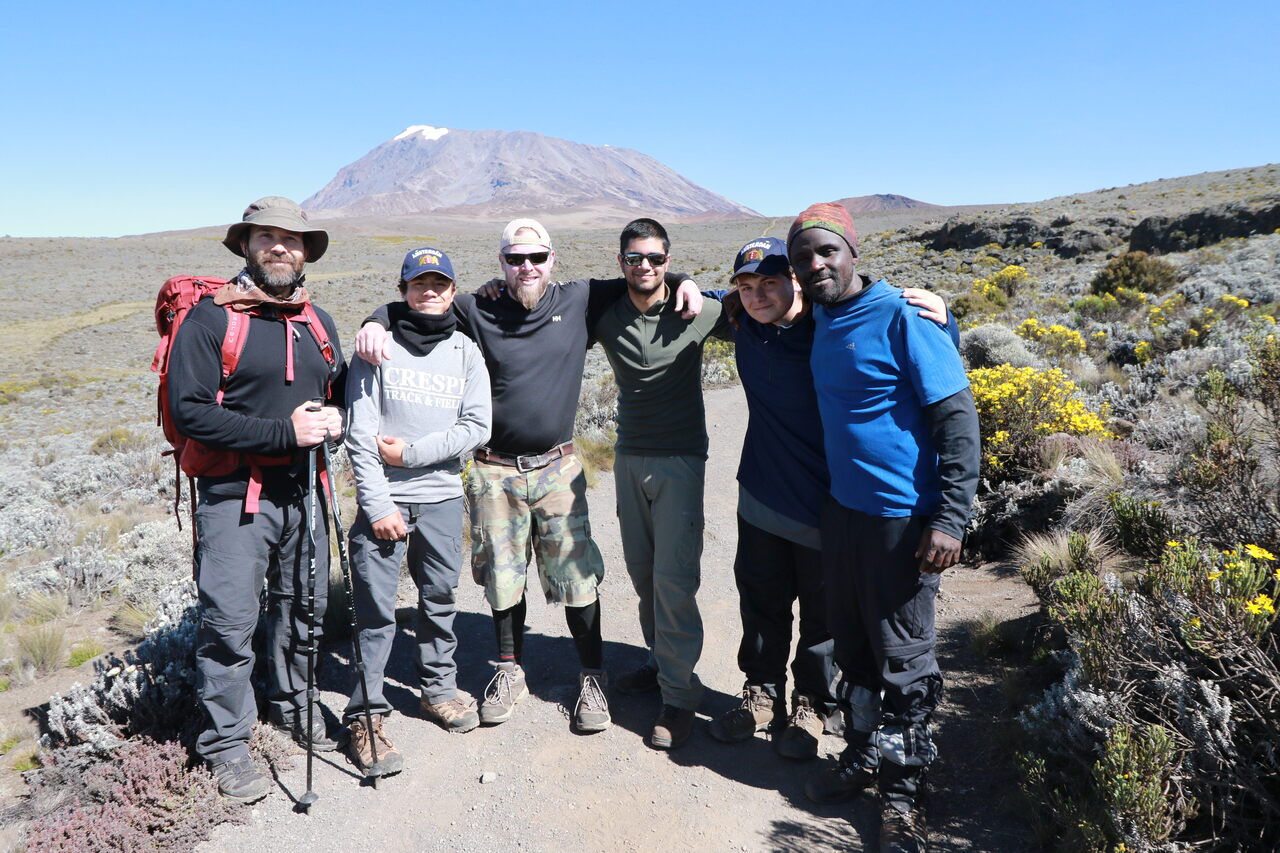
Most people book this trip solo — small groups of like-minded 21–35s mean connection happens fast. No third-wheeling, no FOMO.

70%+
join solo
8–16
per group, max
1 in 3
come back
Trip Details

Everything you need to know, up front.

✈ Start

Moshi
 (
JRO
) ·
6:00 p.m

Meet your Trip Leader at Kilimanjaro International Airport (JRO) by 6:00 p.m., then take the included transfer to Moshi for your first night and welcome dinner.

Please wait to book flights until you receive your post-registration booking instructions.

✈ Finish

Moshi
 (
JRO
) ·
4:00 p.m

After breakfast in Moshi, take the included group transfer to Kilimanjaro International Airport (JRO), with drop-off by 4:00 p.m.

If you’re staying longer, your Trip Leader can suggest more time in Tanzania or elsewhere in Africa.

Physicality

Strenuous

This is a serious high-altitude trek with 6–8 hours of hiking most days, freezing summit temperatures, and a midnight summit push. It’s non-technical, but you should already be active and train before the trip.

Downtime

Limited

Free time is minimal. Aside from a little time in Moshi and some rest at camp, your days revolve around trekking, acclimatizing, eating, and recovering for the next climb.

Where

Moshi

Before and after the climb, you’re based in Moshi, the gateway to Kilimanjaro National Park. Expect local markets, little cafes, and a coffee farm visit that introduces you to Chagga culture.

The Group

8
16
 solo travelers

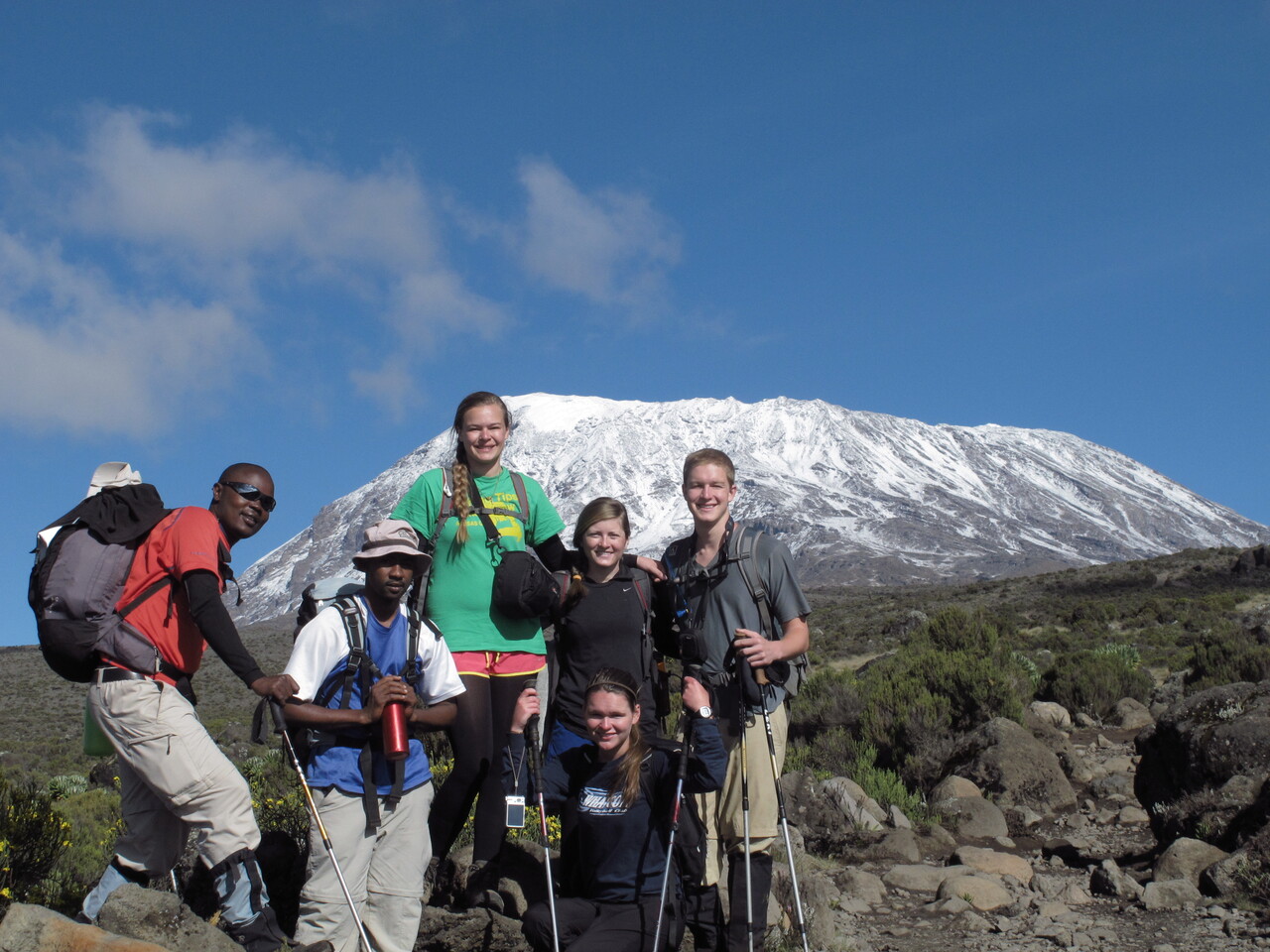
Groups are capped at 16, with most departures around 10–12 climbers. Many travelers come solo, and the shared challenge makes it easy to bond fast.

Day by Day

Day
1

Welcome to Tanzania!

Welcome to Tanzania! Meet your Trip Leader at Kilimanjaro International Airport (JRO) at 6:00 p.m. The included transport will take you to your accommodation in the lively town of Moshi, known as the Gateway to Kilimanjaro National Park.

Moshi dates back to the early 19th century when German colonists built settlements in Africa. Today, the town boasts little cafes serving traditional Tanzanian cuisine and art shops showcasing Swahili culture.

Join your mountain guides and new friends for an included dinner and start soaking up the Tanzanian vibes.

Today's Highlights
  • Meet your Trip Leader at Kilimanjaro International Airport
  • Included transfer to Moshi
  • Welcome dinner with your guides and group
Day
2

Moshi and Preparation Day

Today you will meet with your mountain guides for a full briefing on what to expect on your six-day, 45-mile (72-kilometer) round-trip Kilimanjaro trek, along the Marangu Route. Alongside your guides, you will undergo a detailed inspection of all your gear to determine what you can take up the mountain and what will be left behind.

Take a stroll through the town of Moshi and experience a local market with your Trip Leader. A visit to a coffee farm offers the opportunity to experience coffee production firsthand, alongside learning about the rich culture and traditions of the Chagga people. 

Return to your accommodation for dinner and learn more about your trek up Kilimanjaro from your leader.

Today's Highlights
  • Full Kilimanjaro briefing with your mountain guides
  • Gear inspection for the Marangu Route
  • Walk through Moshi’s local market
  • Visit a coffee farm and learn about Chagga culture
Day
3

Marangu Gate to Mandara Hut

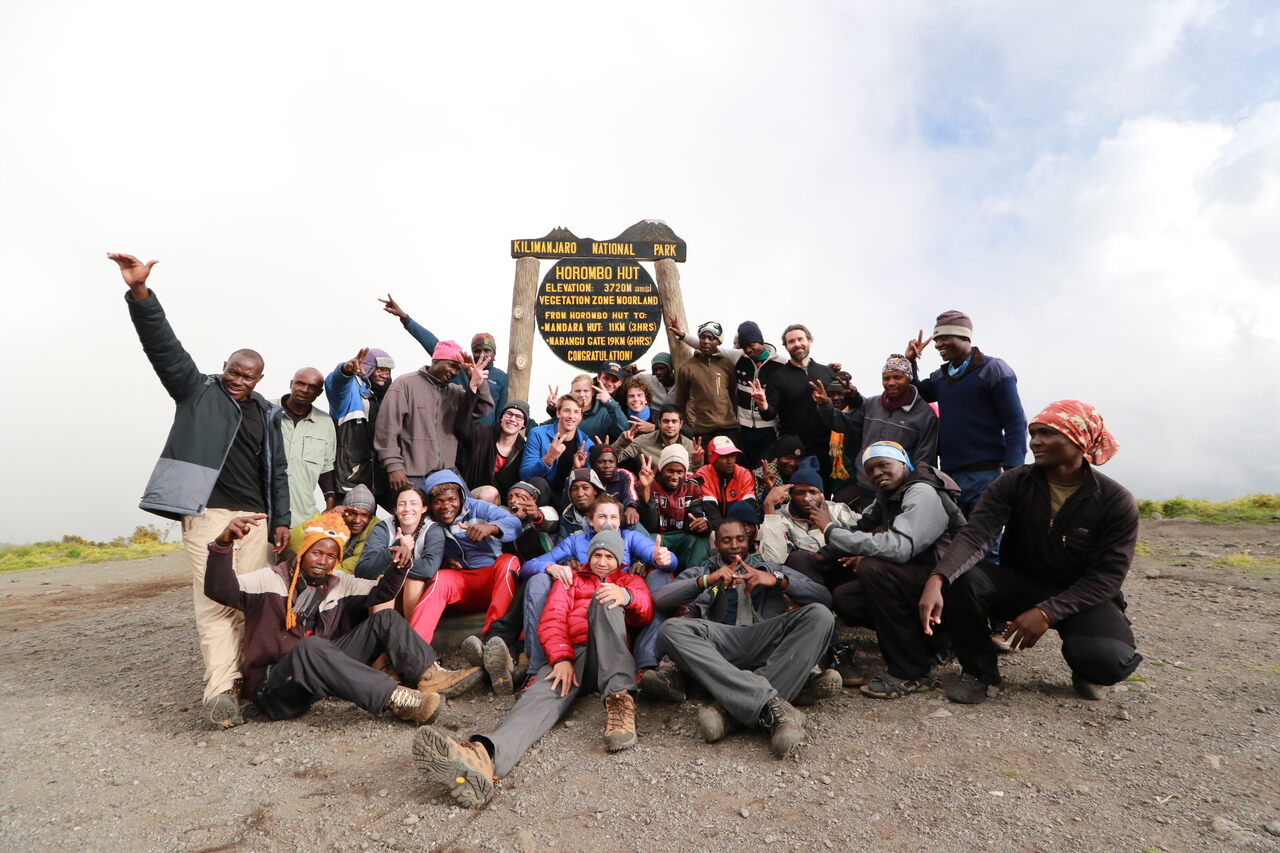
The adventure begins at Marangu Gate, the entrance of Kilimanjaro National Park. Here, you meet your porters, cooks, and support team, who prepare you for the journey.

From here on, you’ll only carry your small daypack during the hikes, while our team of skilled porters will carry your main duffel bag between huts. On the Marangu Route, you’ll sleep in shared mountain huts with bunk beds. Cooks serve hot meals each day in the communal dining areas.

The first day’s train runs through a narrow rainforest trail of Kilimanjaro. A picnic lunch will be at Kisambioni. Continue walking through the rainforest until your group reaches Mandara Hut, your base camp for the first night on the mountain.

Opt to take a short walk to Maundi Crater for views to the east over Taveta, Kenya, and to the northwest to Mawenzi Peak. Travelers who prefer may remain at camp, rest, and take in the atmosphere.

Today's Highlights
  • Start the trek at Marangu Gate
  • Meet the porter, cook, and support team
  • Hike through rainforest to Mandara Hut
  • Picnic lunch at Kisambioni
Your Free Time

After reaching Mandara Hut, you can rest at camp or take a short walk to Maundi Crater for views toward Kenya and Mawenzi Peak.

Day
4

Mandara Hut to Horombo Hut

Your second day on the mountain involves a long hike over slightly steeper terrain than the previous day. You’ll be trekking through Kilimanjaro's moorland, a rocky landscape with desert-like plants. 

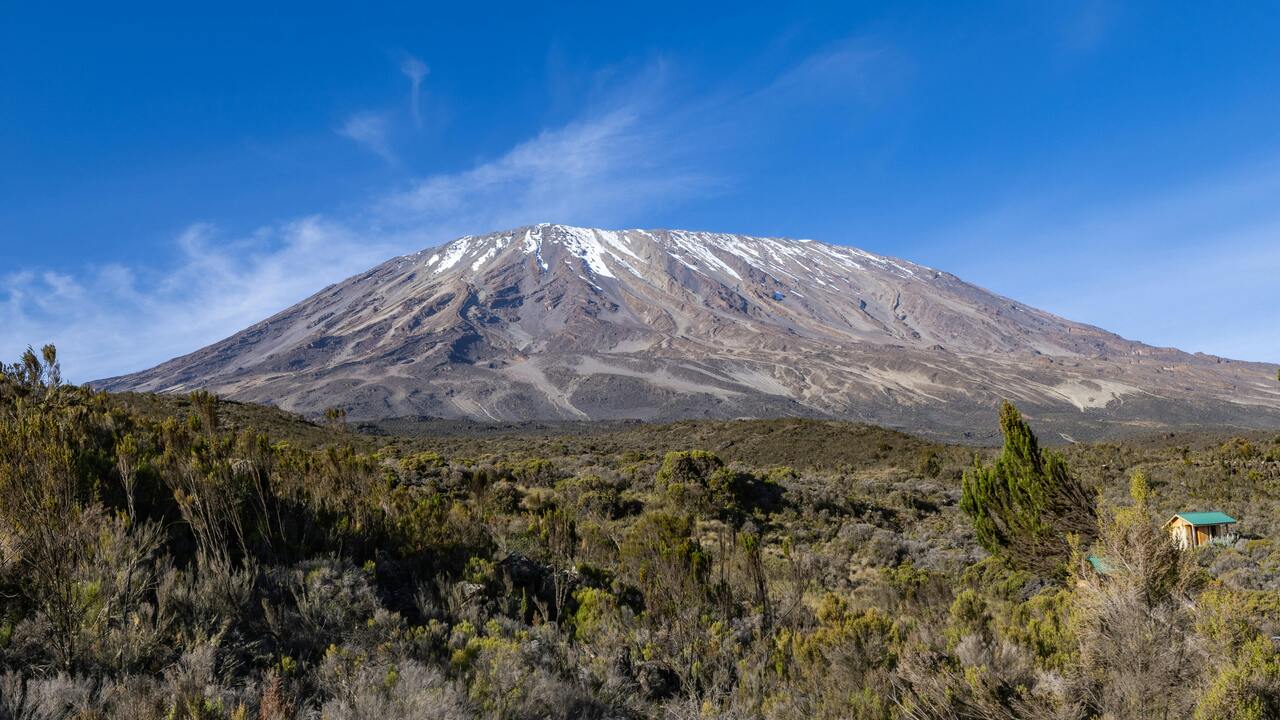
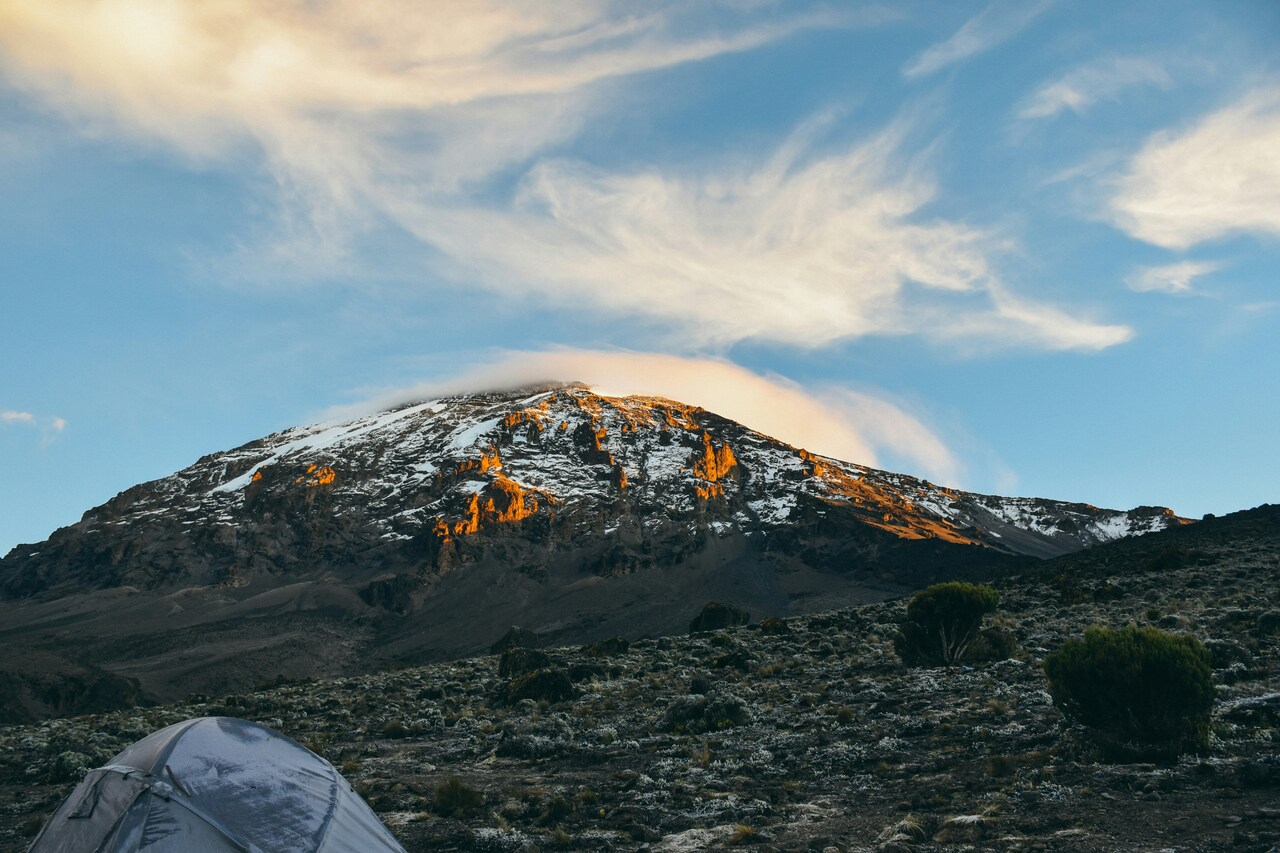
Eat a picnic lunch at Kambi ya Taabu. The afternoon climb will gradually bring your group above the forest canopy, and the twin snow-tipped peaks of Kibo and Mawenzi will appear on the horizon. These two peaks, along with Shira, form the three great cones of Kilimanjaro. 

Settle into Horombo Hut, your accommodation for the next two nights, and enjoy a delicious evening meal.

Today's Highlights
  • Trek from Mandara Hut to Horombo Hut
  • Cross Kilimanjaro’s moorland
  • Picnic lunch at Kambi ya Taabu
  • First clear views of Kibo and Mawenzi
Day
5

Acclimatization Day

It’s time to acclimatize! No, it’s not an off day; it’s actually one of the more critical days on the mountain. Today you will “climb high and sleep low,” climbing up to Mawenzi Hut at nearly 15,000 feet, taking in magnificent views of Kibo along the route.

In the afternoon, you’ll come back down to Horombo Hut for a late lunch with your group. The rest of the day, you can spend relaxing or playing cards with your friends. Drinking plenty of water is very important. If you want, you can ask the mountain guides for suggestions on shorter walks in the area.

Since everyone must remain strong, there is a built-in day in the schedule to allow the body to adjust to the altitude, as the next couple of days will become more intense.

Today's Highlights
  • Acclimatization hike toward Mawenzi Hut
  • Climb high and sleep low at nearly 15,000 feet
  • Views of Kibo before returning to Horombo Hut
Your Free Time

After lunch back at Horombo Hut, you can relax, play cards, or ask the guides about shorter walks in the area.

Day
6

Horombo to Kibo Hut

After breakfast at Horombo Hut, the track continues through the moorland and alpine desert of Kilimanjaro's upper altitudes. As the day progresses, you will notice the landscape gradually becoming more rugged and rocky, and the air noticeably thinner with each step.

Along the hike today, you will see stunning views of Kibo and Mawenzi peaks. The route then crosses the lunar-like landscape of Kilimanjaro’s saddle before the group reaches Kibo Hut in the mid-afternoon.

Settle into Kibo Hut, have a good meal, and be sure to rest up in preparation for tomorrow’s summit! Head’s up because your trek to the summit begins at midnight!

Today's Highlights
  • Trek through moorland and alpine desert
  • Cross Kilimanjaro’s saddle
  • Arrive at Kibo Hut for your final camp before the summit
Your Free Time

Once you reach Kibo Hut, the focus is resting, eating, and getting to sleep before the midnight summit start.

Day
7

Summit Day!

Around midnight, you’ll depart for the final ascent to Uhuru Peak, the tallest free-standing mountain in the world, and the highest point in Africa! The trek begins under a sky full of stars. Headlamps light the zigzag route up a large scree slope to reach Gilman's Point on the crater rim.

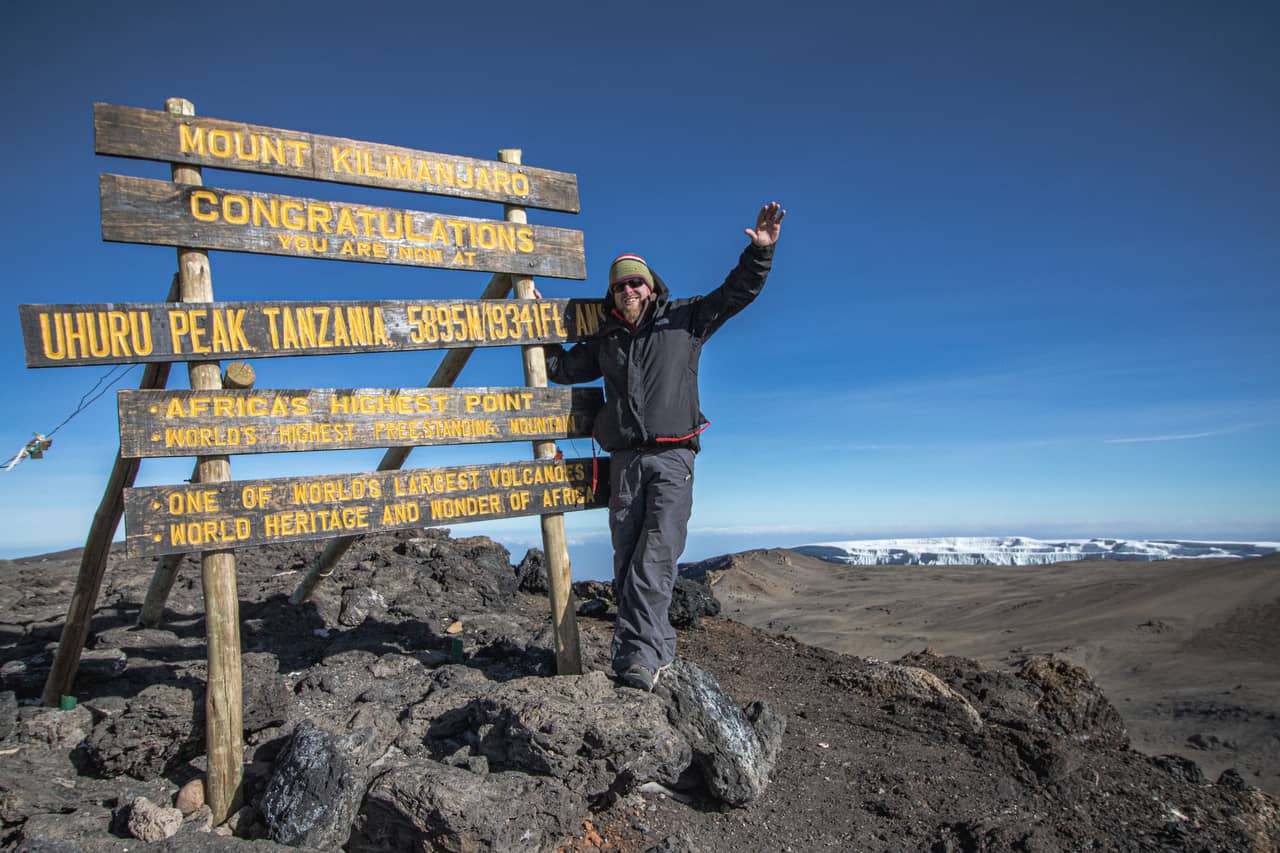
After hiking along rocky switchbacks, you’ll then begin a gradual climb to Uhuru Peak at 19,341 feet. This section will feel the hardest as the altitude starts to take its toll. But the sun rising over the ice field of the crater will make it all worthwhile.

Upon reaching Uhuru, take photos with your team of the spectacular sunrise at the peak and marvel at the magnificent views. After catching your breath, begin the descent back down from the summit. You'll take a short break at Kibo Hut for snacks before continuing to Horombo Hut.

Today's Highlights
  • Midnight summit push from Kibo Hut
  • Reach Gilman’s Point on the crater rim
  • Sunrise at Uhuru Peak, 19,341 feet
  • Descend back to Horombo Hut
Day
8

Horombo Hut to Marangu Gate

Your descent from Kilimanjaro is indeed beautiful and winds through Kilimanjaro's cloud forest. With likely rubbery legs from your climb, watch your step on the way down, as the 12.5-mile (20.12 kilometer) trail can be slippery.

When you arrive at Marangu Gate, you can purchase t-shirts and snacks while awaiting your official Mount Kilimanjaro summit certificate! Here, your transport will be waiting for you, ready to take you to our accommodation in Moshi for a well-deserved shower.

The evening closes with a celebratory dinner shared with fellow climbers and local guides to reflect on your Kilimanjaro experience!

Today's Highlights
  • Descend through Kilimanjaro’s cloud forest
  • Receive your official summit certificate at Marangu Gate
  • Return to Moshi for a shower
  • Celebration dinner with climbers and guides
Your Free Time

At Marangu Gate, you may have a little time to grab a snack or buy a T-shirt while waiting for your summit certificate.

Day
9

Depart Tanzania

On the final day of your Kilimanjaro experience, soak up the gratitude of a job well done!

After breakfast, bid farewell to your trekking buddies and mountain guides. Then, take the included group transportation to Kilimanjaro International Airport where you will be dropped off by 4:00 p.m.

Your Trip Leader will offer suggestions if you plan to spend more time in Tanzania or elsewhere in Africa!

Today's Highlights
  • Final breakfast in Moshi
  • Included group transfer to Kilimanjaro International Airport
  • Airport drop-off by 4:00 p.m.
Where You'll Stay

Moshi hotels, then Marangu huts

4-star boutique · Featured on this trip

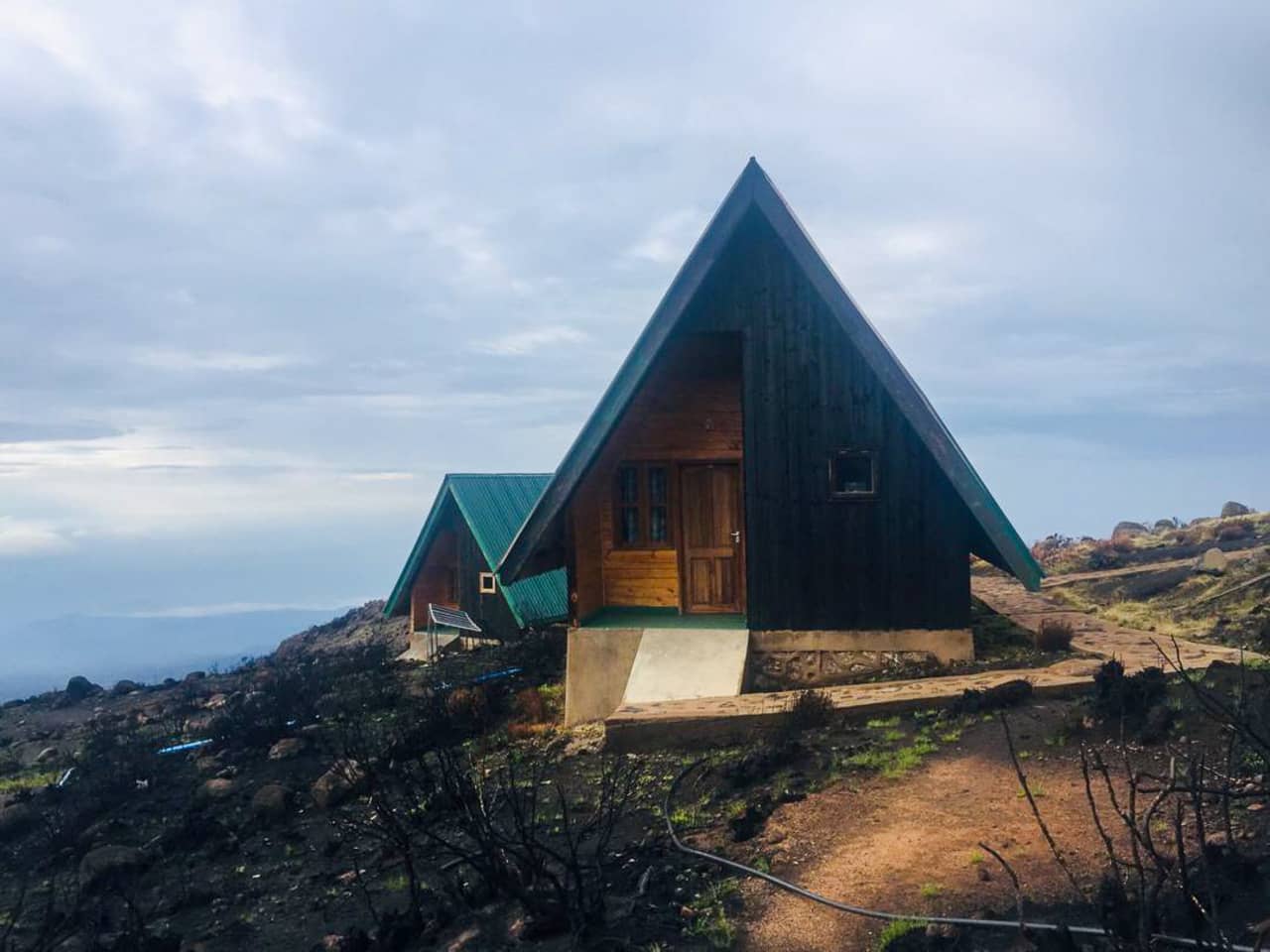
Locally owned hotel rooms in Moshi and A-frame huts on the Marangu Route

Moshi and Mount Kilimanjaro, Tanzania

Three nights are in shared, locally owned hotel rooms in Moshi. On the mountain, you’ll spend five nights in wooden A-frame huts with bunk beds, simple mattresses, and shared toilets and washing facilities.

Locally owned

Solo travelers share same-gender hotel rooms, and mountain huts are shared with no private room option on the trek.

No Hidden Fees, Ever

What's included

    • 9 days & 8 nights shared accommodations in hotel rooms (3 nights) and mountain huts (5 nights) during the trek
    • 8 breakfasts, 6 lunches, & 8 dinners
    • 6-day guided group trek up Mt. Kilimanjaro’s Marangu Route
    • Certified mountain guides throughout the trek
    • Local guides, cooks, and porters during the trek
    • All permits and fees to climb Mt. Kilimanjaro
    • Transportation to and from Marangu Gate
    • Visit to a coffee farm in Moshi
    • Private airport pick-up upon arrival
    • Private airport drop-off upon departure
    • Under30Experiences Trip Leader
    • Personal recommendations for optional activities
    • The chance to meet some kick-ass people
    • Access to the Under30Experiences community
    • Taxes always included, never hidden fees, & NO blackout dates

Not included

    • International airfare to and from Kilimanjaro (JRO).
    • Travel insurance, visas, and vaccinations.
    • Optional activities and personal expenses.

You don’t need ropes or technical climbing skills, but you do need preparation. Certified mountain guides lead the way, porters carry your main duffel, and you’ll sleep in huts with hot meals served along the route.

Why U30X, Not the Other Guys

This isn't a 50-person tour bus.

Plenty of companies will fly you to Costa Rica for less. Here's what you're actually paying for — and why people who travel with us rarely go back to the alternative.

8–16

A real group, not a crowd

Small enough that you'll know everyone's name by day two. Not a 40-person coach where you're a wristband.

Boutique stays, not party hostels

Locally-owned places with character and comfort — not a bunk in a 12-bed dorm. Where you sleep is part of the trip.

Real free time, not a forced march

We guide the big moments and leave the rest open. No 6am wake-up calls to tick boxes you didn't ask for.

One price, no nickel-and-diming

Hotels, activities, ground transport, your leader, and taxes — included. No hidden fees stacking up after you book.

Don't Take Our Word For It

10,000+ travelers. 4.9 stars. 1 in 3 come back.

5

Have been on multiple trips with under30 and every time has been such an incredible experience. Can’t recommend enough!

Callie M. — Kilimanjaro Trek
Callie M.
Other
5

This was my first time traveling with a company/group and I loved it! The U30X team was so helpful before the trip with all communications. We had an amazing tour guide on our trip! I will forever be grateful for the new friendships and memories U30X has given me!

Jade M. — Kilimanjaro Trek
Jade M.
Other
5

Fantastic itineraries, amazing group leaders, and authentic experiences! Highly recommend.

Amy F. — Kilimanjaro Trek
Amy F.
Other
Straight from the group chat — tagged @under30experiences
Follow →
No items found.
You're in Good Hands

Looked after, before and during.

During the Trip · Your Trip Leader

Vetted, experienced & with you the whole way

Every departure is led by a dedicated U30X Trip Leader who handles the logistics, brings the group together from day one, and works alongside our trusted local guides on the ground.

"My job is to make sure you never feel lost — and never feel like you're traveling alone."

Support that doesn't sleep

  • 24/7 global support

    Reach a real person any time, anywhere, before and during your trip.

  • WhatsApp us anytime

    Message us at 1 (888) 959-4436 — we answer how you actually communicate.

  • Safety-first, always

    Vetted partners, trusted accommodations, and a leader who's done this before.

Before You Even Leave

You won't show up to a plane full of strangers.

The community starts the day you book — not the day you land. By the time you're at the airport, these are already people you've been talking to for weeks.

  • 1
    Your group chat opens early
    Get added to your trip's WhatsApp group ahead of time — coordinate flights, ask questions, start the inside jokes before day one.
  • 2
    Meet your group before you go
    A pre-trip welcome call introduces everyone and answers the nervous-first-timer questions.
  • 3
    Know who's coming
    See your roster and Trip Leader ahead of time, so the first hello feels like meeting a friend.
Good to Know

Kilimanjaro Trek FAQs

What optional activities are available?

Due to limited free time, there are no optional activities on this itinerary.

What's the weather like?

Night temperatures can often drop sharply when you're above 12,000 feet (3,658 meters), so proper clothing and a sleeping bag for this kind of climate are essential.

Below, we’ve outlined what to expect from the weather throughout the year, typically. Always remember, you're on a mountain and the weather changes very quickly.

January to March (dry and quiet)

The weather in the first few months after the short rainy season is generally warm and dry. This period falls outside the high season and is relatively quiet. It is one of our favorite times to climb Kilimanjaro.

April and May (long rainy season)

The long rainy season in Tanzania typically occurs from April to May, although it has become unpredictable in recent years. If you don't mind the rain, you can have the mountain pretty much to yourself. You can often get a good discount during this period.

June to early November (dry but busy)

These are the driest months for your Kilimanjaro climb, and, particularly during August to October, the mountain is very busy. The shoulder months of June, July, and early November are reasonable compromises with less traffic if a bit of rain doesn't deter you.

November to mid-December (short rainy season)

The short rainy season typically starts towards the end of November and lasts for 3-4 weeks. Generally, rain is less persistent than during the rainy months of April and May, so this is a good time to be on the mountain without the crowds.

On the mountain
Temperatures on Kilimanjaro vary dramatically depending on altitude and time of day. At the base, daytime temperatures reach 70 to 80 degrees Fahrenheit (21–27 degrees Celsius), but as you climb higher, expect much colder conditions. Above 12,000 feet (3,658 meters), nighttime temperatures often drop below freezing. At the summit, they can range from 20 degree Fahrenheit (–7 degree Celsius) to –10 degree Fahrenheit (–23 degree Celsius), and wind chill makes the temperature feel even colder.

Step-by-Step Guide

Planning to climb Kilimanjaro is exciting, but you may have many questions. To make things easier, we've created this guide to Kilimanjaro FAQs. You don’t have to wonder about visa requirements or the best time to visit; our detailed answers will help you prepare for an unforgettable adventure. We've put together everything you need to know right in these Frequently Asked Questions so you can enjoy your smooth and stress-free climb up Kilimanjaro.

Have a question that's not on this list?

Feel free to reach out to our all-star customer service team at info@under30experiences.com or via WhatsApp +1 (888) 959-4436.

Do you have last-minute deals?

Yes! When travelers take advantage of our “Switch Your Trip” program, last-minute slots open up on sold-out trips.

Visit our Trips On Sale page for the latest last-minute deals.

Sign up to the list to be notified.

Why choose the Marangu Route?

The Marangu Route, often called the “Coca-Cola Route”, is the only Kilimanjaro route with mountain hut accommodations instead of tents. Here, trekkers sleep on bunk beds and mattresses for a more comfortable night’s rest. It’s also the most established trail, with a gradual ascent and well-maintained paths, making it popular for trekkers seeking a scenic yet non-technical climb.

On this trail, you’ll pass through five distinct climate zones, from lush rainforest to alpine desert and finally the glacier-capped summit. Along the way, hot meals will be served in communal dining huts, which is very convenient. While it’s considered one of the more approachable routes, the challenge remains real, and success still requires proper preparation and acclimatization.

Is Tanzania LGBTQI + friendly?

Tanzania, including Zanzibar, has laws against same-sex relationships, and its society tends to be conservative on LGBTQI+ issues. Public displays of affection, such as holding hands or kissing, between same-sex partners can lead to legal consequences. While many LGBTQI+ travelers do visit Tanzania, we recommend discretion and respect for local customs and laws to keep your trip safe and enjoyable.

How much do you recommend we tip the porters?

Tipping is a kind gesture and a highly appreciated part of your Mt. Kilimanjaro trek. It shows your expression of satisfaction with those who have assisted you throughout the expedition and directly supports the East African community. Although it may not be customary for you, it is of considerable significance to your guides, assistants, cooks, and porters, as an essential source of and supplement to their income.

If paying each crew member individually, you can use the following Tipping Guide Chart as a guideline. This usually ends up being around 200-275 USD per climber.

  • Chief Guide: 25 USD per day
  • Assistant Guide: 15 USD per day
  • Cook: 15 USD per day
  • Porter: 10 USD per day

Your support team helps you reach the summit safely and comfortably, from carrying gear to preparing meals and guiding you along the route. Many climbers find that expressing appreciation through tipping is a meaningful way to acknowledge their hard work and dedication.

Gifts in addition to monetary tips are also welcome, such as quality warm clothing or footwear in good condition. These guidelines are flexible. Feel free to adjust based on the level of service, your group size, or the particular effort of individual team members.

Will the effects of the sun be stronger on the mountain?

Absolutely! And you’ll need to take it seriously. Approximately 55% of the Earth's protective atmosphere sits below an altitude of 16,000 feet (5,000 meters), which means far less ultraviolet light gets filtered out. The sun's rays at altitude are much stronger and can cause severe sunburn. It is strongly recommended to use an SPF 30+ sun protection cream at lower altitudes, and SPF 50+ above an altitude of 10,000 feet (3,000 meters). It is also important to wear dark sunglasses, preferably with side panels above 13,000 feet (4,000 meters) in daytime and essential when walking through snow or ice. Snow blindness can be very painful and will require your eyes to be bandaged for at least 24 hours.

Should I be worried about mountain sickness?

At high altitude, above 11,500 feet (3,500 meters), oxygen levels and air pressure drop, which can cause the body to react in unpleasant ways. The most common complaint at altitude is acute mountain sickness (AMS). Less common are the complaints of high-altitude pulmonary edema and high-altitude cerebral edema (HAPE and HACE). AMS is the most common complaint on Mount Kilimanjaro. It occurs when the body cannot acclimate and suffers from a lack of oxygen. Symptoms include headaches, nausea, vomiting, diarrhea, loss of appetite, fatigue, and insomnia. Most climbers suffer from a few of these symptoms, the most common being a headache and insomnia.

Should I be worried about hypothermia?

It’s unlikely you’ll get hypothermia. Wearing adequate clothing, especially on summit day, is essential and will help prevent symptoms of hypothermia, including drowsiness, cold skin on covered parts of the body such as the stomach or armpits, slurred or confused speech, and sometimes even not feeling chilly despite a bitterly cold environment. If you notice another member of your group experiencing any of these symptoms, alert your guides immediately.

How cold is it on Kilimanjaro?

Temperatures on Kilimanjaro vary widely depending on altitude and time of day. At the base, daytime temperatures can be a comfortable 70 to 80 degrees Fahrenheit (21 to 27 degrees Celsius), but as you climb higher, expect much colder conditions. Above 12,000 feet (3,658 meters), nighttime temperatures often drop below freezing. At the summit, temperatures can range from 20 degree Fahrenheit (-7 degree Celsius) to -10 degree Fahrenheit (- 23 degree Celsius), with wind chill making the temperature feel even colder.

It’s possible to experience all four seasons in a single climb — warm and sunny in the rainforest, brisk and dry in the alpine desert, and freezing at the summit. Pack in layers so you can adjust quickly to changing conditions.

I have a peanut allergy. Is that a problem for this trip?

Yes, especially if you have a severe allergy. Tanzania is a leader in East Africa for peanut production. Peanuts are common snacks on the Kilimanjaro hiking routes and peanut oils are used in the cooking preparations.

With that being said, accommodations can be made but as a traveler you must be diligent and prepare accordingly. Bring your own nut-free snacks, always ask questions to the cooks on how the food was prepared, inform your leaders frequently of your allergy, and never assume dishes are safe.

Additionally, carry an allergen card. Have a card written in the local language that clearly states your allergy and the severity. Showing this card can help avoid confusion.

What is altitude sickness, what symptoms should I expect on the trek, and what are the best ways to prevent it?

During the trek, it is likely that all climbers will experience at least some form of mild altitude sickness. It happens when the body can’t adapt quickly enough to the thinner air and reduced level of oxygen. There are many different symptoms, but the most common include headaches, light-headedness, nausea, loss of appetite, tingling in the toes and fingers, and mild swelling of the ankles and fingers. These mild forms are not severe and will typically disappear within 48 hours. Please consult your physician if you are considering preventative medications.

Here are some standard methods to prevent altitude sickness:

  • Listen and communicate with your guides. They are professionals who know the ins and outs of life on the mountain and can help you manage altitude sickness.
  • Stay hydrated! Drink at least three liters of water per day. High altitudes, arid environments, wind, and continuous movement may result in dehydration. Your body requires much more water on the mountain than usual, so be sure to take sips frequently. Some people will need five to six liters per day! So, sip often.
  • Avoid tobacco, alcohol, and other depressant drugs, including barbiturates, tranquilizers, and sleeping pills.
  • “Don’t go up until symptoms go down.” Everyone acclimates differently, so give your body the time it needs before climbing higher. If you start to feel ill, let your guides know right away. They are used to these situations and will coach you along the way.
  • Before your trip, do your best to get as much rest as possible and come into the trip fresh. Coming in burned out or overstressed makes the hike far harder. You want to be mentally and physically prepared for the hike.
  • Take your time. Pace is a critical factor on all routes. "Pole pole" (go slowly) is the best way to reach the summit safely. Your guides will set the pace from the start. 
  • Climb high, sleep low: If you have enough energy when you reach camp, talk to your guides about taking an afternoon stroll further up the mountain before descending to sleep (though not if you have any symptoms of altitude sickness).

What is the highest altitude we will reach on the Kilimanjaro trek?

The highest altitude is 19,340 feet (5,895 meters).

What are my options if the trek becomes too difficult for me?

If you are in any physical danger or suffer from altitude sickness, the porters will escort you down the mountain safely.

Where do we leave stuff that we don’t bring on the trek?

You will have the chance to repack the night before the trek, and leave behind anything you won’t need.

Your extra belongings will be safe at the group hotel for the duration of the hike. We trust everyone we work with, but feel free to bring a luggage lock if that makes you feel safer.

What is the pace of the trek?

You will hear the phrase “Pole Pole” from your guides quite regularly. In Swahili, this translates to “walk slowly, walk slowly”. The trekking pace is relaxed with breaks as needed. The slow pace allows the body to acclimate gradually.

What style of backpack or duffel do you suggest?

Size between 75L and 100L is ideal. The North Face or Patagonia duffels are common choices.

Am I expected to carry my own luggage on the trek?

You will not be responsible for carrying your luggage up Kilimanjaro. The porters can carry up to 25 pounds (11.3 kilograms) of your gear. Anything extra can be stored safely at the hotel. You’ll only carry your day pack with essentials and personal items you need to have with you at all times.

I’ve heard not all hikers reach the summit. What can I do to improve my chances?

That’s true. Factors such as weather conditions, fatigue, altitude sickness, and inadequate preparation can limit hikers from reaching the summit. Our team will do its best to support you every step of the way, but your preparation matters most.

To prepare better for your trip, focus on:

Cardiovascular endurance: Engage in regular aerobic exercises, such as hiking, running, cycling, or swimming, to improve your stamina for long days of trekking. 

Hiking practice: Go on regular hikes with a weighted backpack to simulate the conditions on Kilimanjaro and get your body accustomed to the uneven terrain. 

While on the trek, keep in mind the importance of the following:

Positive attitude: Keeping a strong sense of purpose and a positive mindset can help you persevere through challenging moments.

Focus on the present moment: Take things one step at a time and concentrate on the immediate task at hand, rather than the entire climb.

Breathing techniques: Practice deep breathing and mindfulness exercises to stay calm and manage the possible stress during the climb. 

Respect the "Pole Pole" rule: Slow and steady progress is crucial for acclimatization. The guides go slow for a reason. This is the safest way to acclimate your body to the environment properly. Don’t just try to get to the next camp as quickly as possible.

I’m not an avid trekker. Can I still join this trip?

While climbing Mount Kilimanjaro is not an easy task, it’s a very achievable hike for healthy travelers with moderate physical fitness. That said, some training before the trip makes a big difference. The best way to prepare is to hike and hill-walk wherever you can in the weeks before your departure to build up your stamina and climbing muscles. If you don’t have any mountains nearby, a stair-climber at the gym is a good alternative. Ideally, start training six months before. With proper preparation, you should get to the top without much difficulty.

What kind of meals can we expect during the trek?

 Keep in mind that the food you’re planning to eat will be carried up the mountain, mainly by the porters. There are no stores on the trail that sell snacks or basic items.

Here is a generic list of what you can expect for your meals:

  • Breakfast: toast, muffins, eggs, and fruit
  • Lunch: chicken, hard-boiled eggs, muffins, chapati, fruit, carrot sticks, basic sandwiches, sweets
  • Dinners: Pasta and rice-based dishes served with meat or veggie sauce; potatoes, soups, and bread
  • Snacks: popcorn, peanuts, coffee, and tea

What are the sleeping accommodations like on the trek?

On the Marangu Route, you’ll stay in wooden A-frame huts with single beds and simple mattresses. Space on the mountain is limited so you may share your hut with other trekkers, possibly including those outside the Under30Experience group or of the opposite sex. All huts are equipped with shared toilets and washing facilities.

What effects can I expect from the altitude?

The air at the summit contains about half of the breathable oxygen we’re used to at sea level. Everyone will handle the high altitude and thinner air differently and to varying degrees, which is why we try to keep the ascent slow and steady. The more time you give yourself to acclimatize, the easier your attempt at the summit will feel.

How physically demanding is this trip?

Very. This climb is for those who enjoy physical challenges and want the sense of achievement that comes with them. You can expect intense physical activities since you’ll be active 6-8 hours most days. Hence, you should already lead an active lifestyle. If you don’t already have an active lifestyle and want to participate, consider starting a training regimen.

Although you don’t need mountaineering experience, this is undoubtedly a strenuous climb, so the better prepared you are, the more you will enjoy it. Each day allows plenty of time to travel between the huts on the mountain, so you do not need to rush. You are far better off going slowly and enjoying the changing scenery and views. That way, you acclimate better, which gives your body more time to adjsut for the final trek to the summit.

We recommend that in the months before your climb, you increase your physical fitness with aerobic exercise. Walking, running, and stair-climbing will all strengthen your legs and boost your stamina.

Do I need a visa to enter Tanzania?

Yes. All tourists are required to have a visa to enter Tanzania. You can apply for an online visa here.

Mount Kilimanjaro • Tanzania

Take on Africa’s highest peak

Trips from $3,495 with just a $195 deposit, and you can switch your trip for free up to 60 days before departure.

From
$
3495
reserve for $
195
Book This Trip →

🇨🇷 New 2027 itinerary now available for Costa Rica Extended.